ARTICLE AD
Of all the things I expected to find in Benin, a 30-foot spaceman wasn’t on my list. He stares back at me against a riot of colour, looking almost as surprised to see me as I am him.
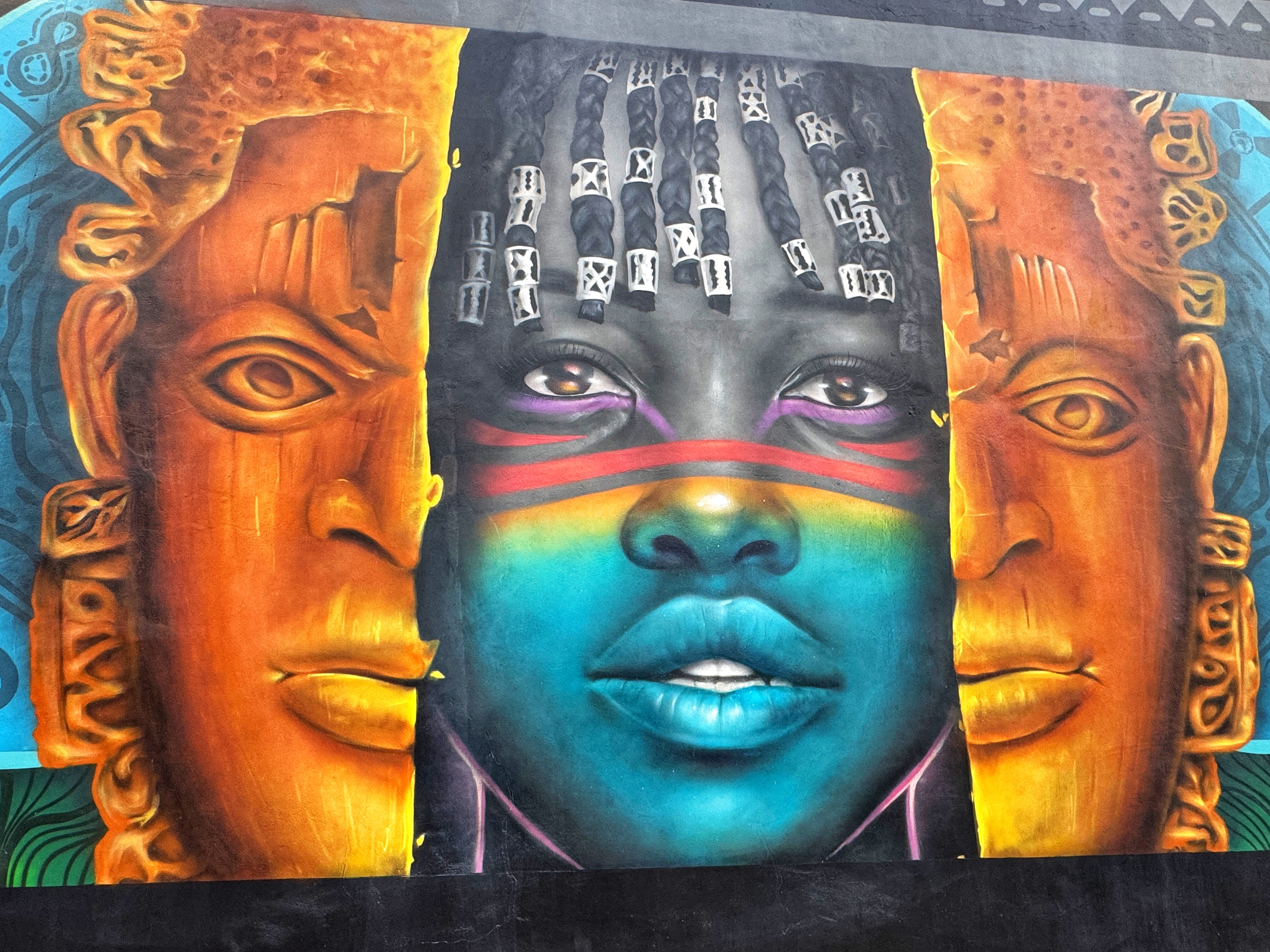
The mural is part of Africa’s largest street art wall, the Marina Boulev’art, in Benin’s largest city, Cotonou. Unveiled in 2024, currently there are depictions of Benin’s history and ambitions for the future from 40 local and diaspora artists. It’s nearly a kilometre long and continues to grow with serious, satirical and playful creations. One mural shows locals embracing across religious divides; another splits an ancient mask open to reveal the serene face of a teenage girl.
Wedged between regional heavyweights Ghana and Nigeria, Benin remains overlooked by many international travellers, despite recent heavy investment in tourism and cultural projects. But this torch-shaped country packs an outsized cultural and historic punch.
Standing at nearly 17 metres tall, the “Door of No Return” in Ouidah, an hour’s drive west from Cotonou symbolises the darkest chapter of Benin’s history. Millions of Africans were forced onto slave ships from this coastline. The Rue des Esclaves from Ouidah to the coast was the best-preserved thoroughfare in the whole region, built to speed the final journey of captives towards the ships.
Our guide from Mowoki Tours, Essodong, explains that many captives never even reached the ships, with those deemed too weak to survive the journey murdered by their captors prior to transit, or taking their own lives at the sight of the Atlantic.
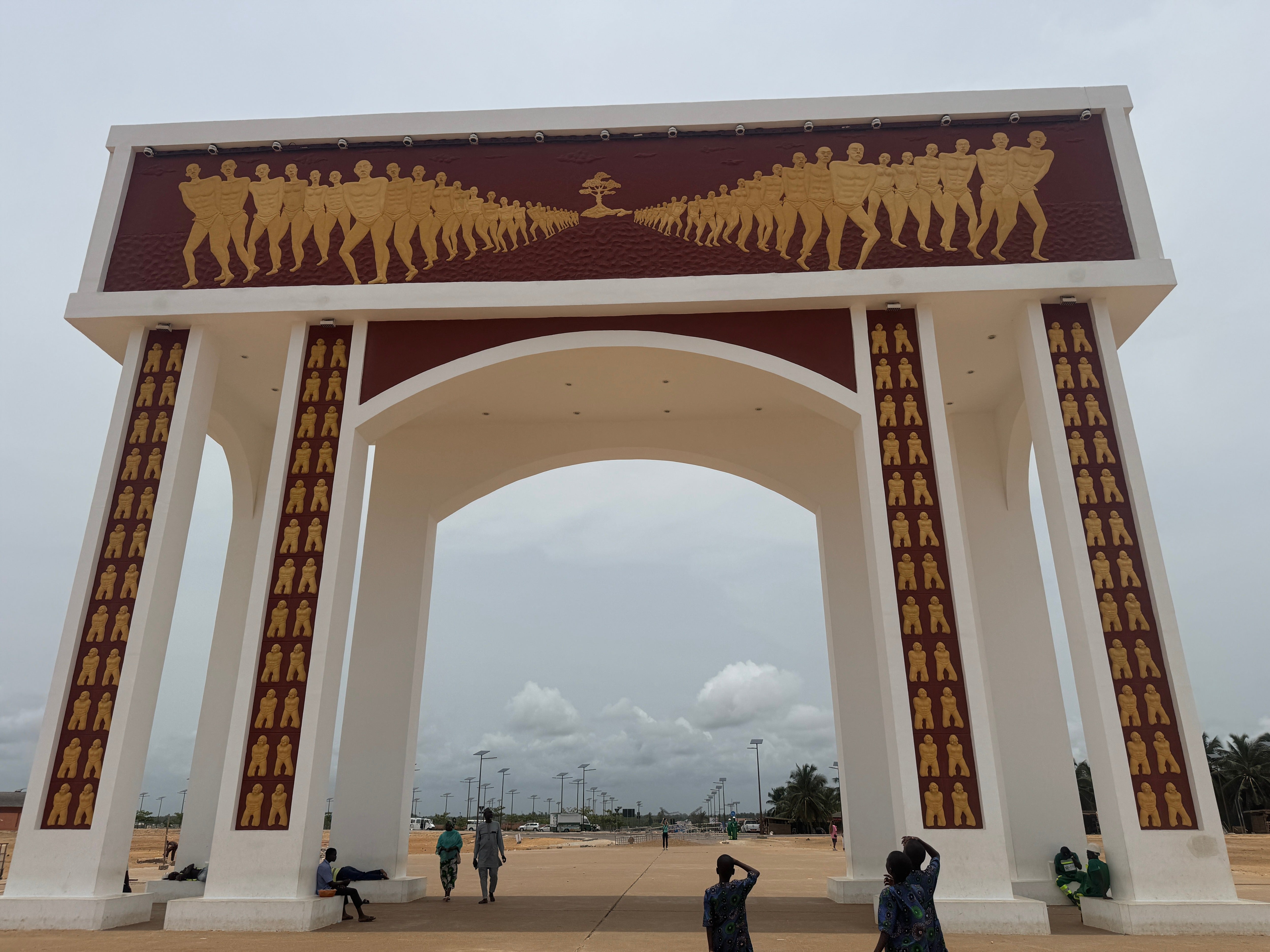
Carved into the arch of the door are haunting figures of chained captives walking towards the Atlantic, away from the “Tree of Forgetfulness”. In Vodun tradition, captives circled this tree before departure, symbolically severing ties with their homeland.
Standing here on a calm morning, little is needed to imagine the corrosive agony of such a place and the horrors those who were brought here endured. Benin still wrestles openly with this dark history. The country abandoned the name Dahomey – the name of the pre-colonial kingdom – in 1975, partly because of the kingdom’s central role in supplying slaves to European traders.
Read more: Why it’s worth flying to South Africa for winter sun
Ouidah’s other principle attraction draws on the same spirituality as the Tree of Forgetfulness. Confounding the Western stereotype of curses and pin-filled dolls, Vodun is a vibrant, living belief system and an official religion of Benin.
A few miles from the Door of No Return, in the centre of Ouidah, lies the Python Temple, where the resident snakes are sacred, believed to provide a bridge between the living and the gods. It welcomes visitors, who are permitted to handle the snakes, and demystifies the cliches many have of the religion.
The Temple faces the city’s early 20th-century basilica. Unlike other countries in the region, Benin’s spiritual prism is decidedly flexible. Many inhabitants combine traditional practices with a sprinkling of Catholicism; attending Mass on a Sunday, leaving an offering at the Vodun temple on their way home.
“Best to leave nothing to chance” Essodong explains with a grin.
Proximity of sacred spaces creates occupational hazards, with priests finding the odd python slithering among the pews. Rather than eliciting screams, a python in your house is considered a good omen in Vodun tradition. They’re calmly returned to the temple, as if they were forgotten items of clothing.
The final stop on our Beninese road trip begins precisely where the road runs out.
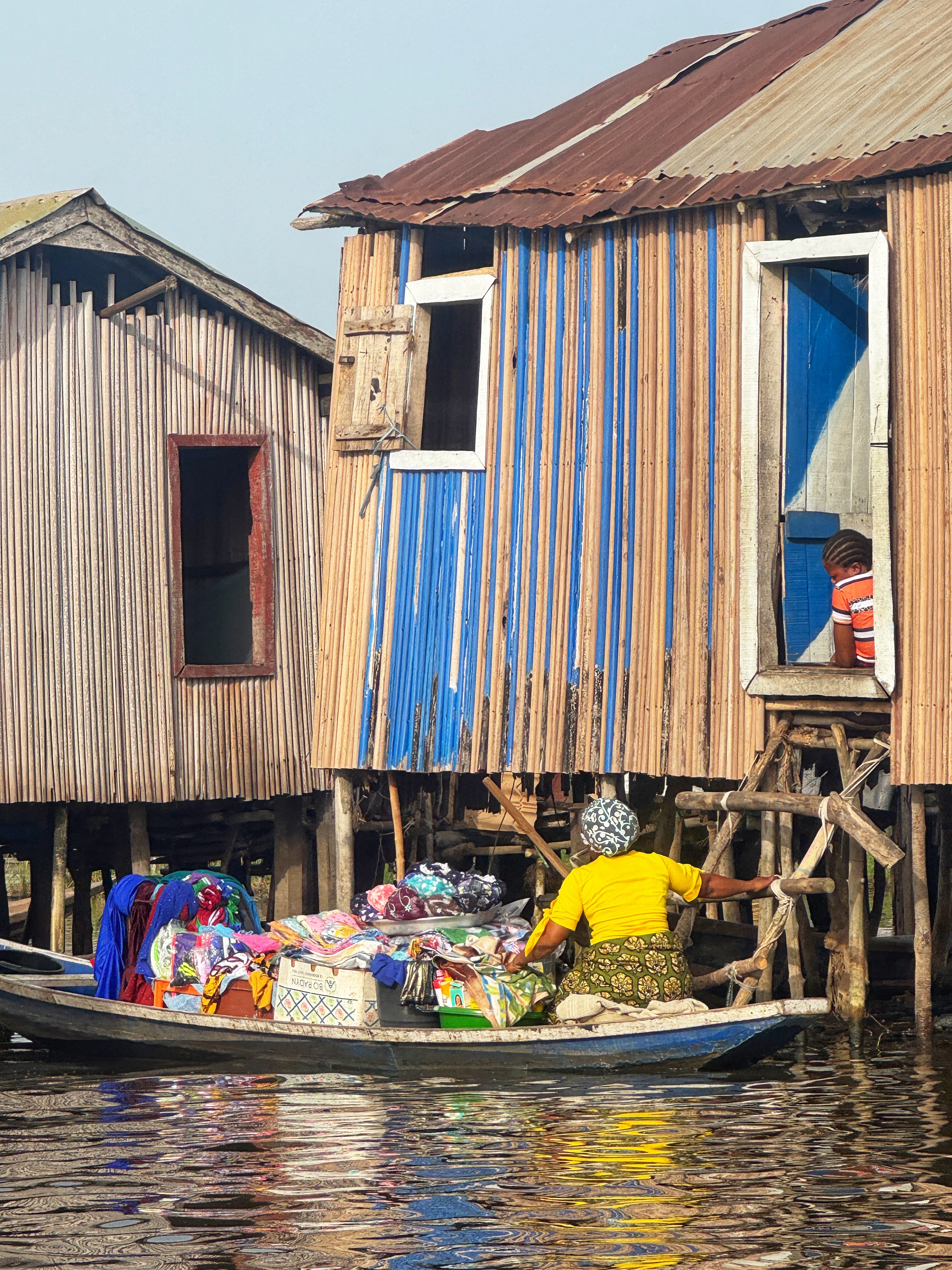
Ganvié is often dubbed the Venice of Africa but it really should be beyond lazy comparisons. Some 25,000 people live, work and socialise in buildings hoisted on stilts above Lake Nokoué, which is separated from the Atlantic by a narrow sandbar occupied by the city of Cotonou.
Like so much in Benin, its origins link to the slave trade, but here with a tale of defiance and resistance. In a desperate escape from local slavers, the Tofinou people fled to the banks of Lake Nokoué. According to legend, they were carried across the water on the back of a giant crocodile, which remains the symbol of the town. Appropriately, Ganvié translates as “we survived”.
At first glance, the houses on stilts look fragile, as though a stiff gust might scatter them across the lake. Up close, they feel reassuringly solid, as they’d need to be after sheltering generations of Ganvié residents for four centuries.
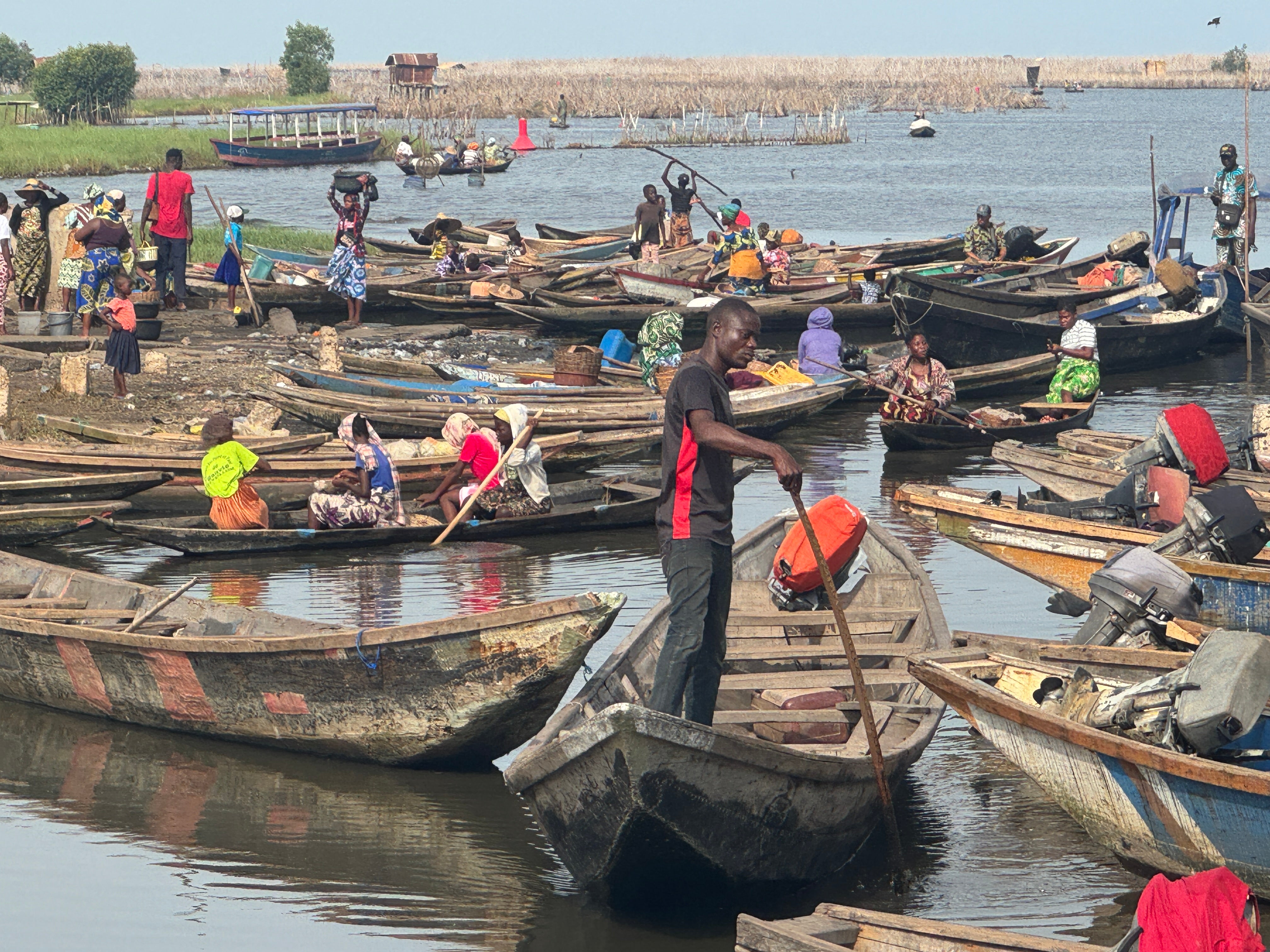
In the late afternoon light, Lake Nokoué glitters like liquid silver. Commuter boats, as packed as any rush hour subway, criss-cross the water while women in bright headwraps steer pirogues stacked with blue fuel containers. Most striking are the children, some barely five years old, paddling confidently and casting fishing nets with practised ease.
Boys break off from their fishing to wave, crying out “yovo, yovo” (the ubiquitous word for “white person”), followed by a flurry of words in Tofinu, the local language.
Essodong explains they’re inviting us to join them in their fishing expedition. When we demur, commenting on lack of experience, he laughs.
“Oh they know you’d be useless, but having a yovo on board is said to bring good fortune.”
I suppose it’s more practical than finding a python.
Ganvié’s future is fragile. Pollution, overfishing and invasive water hyacinths threaten the lake ecosystem, although locals weave the choking plants into baskets and mats, repurposing what the lake provides as they have for centuries. Many hope increased tourism can fund infrastructure improvements and create enough opportunity to slow the steady drift of young people to the mainland.
Back in Cotonou, darkness falls like a portcullis as we reach the end of the Marina Boulev’art. It’s far from quiet, with zems (motorcycle taxis, whose name delightfully translates as “get me there fast”) whizzing in and out of gaps in the traffic, drivers wearing yellow vests like a hive of overactive bees.
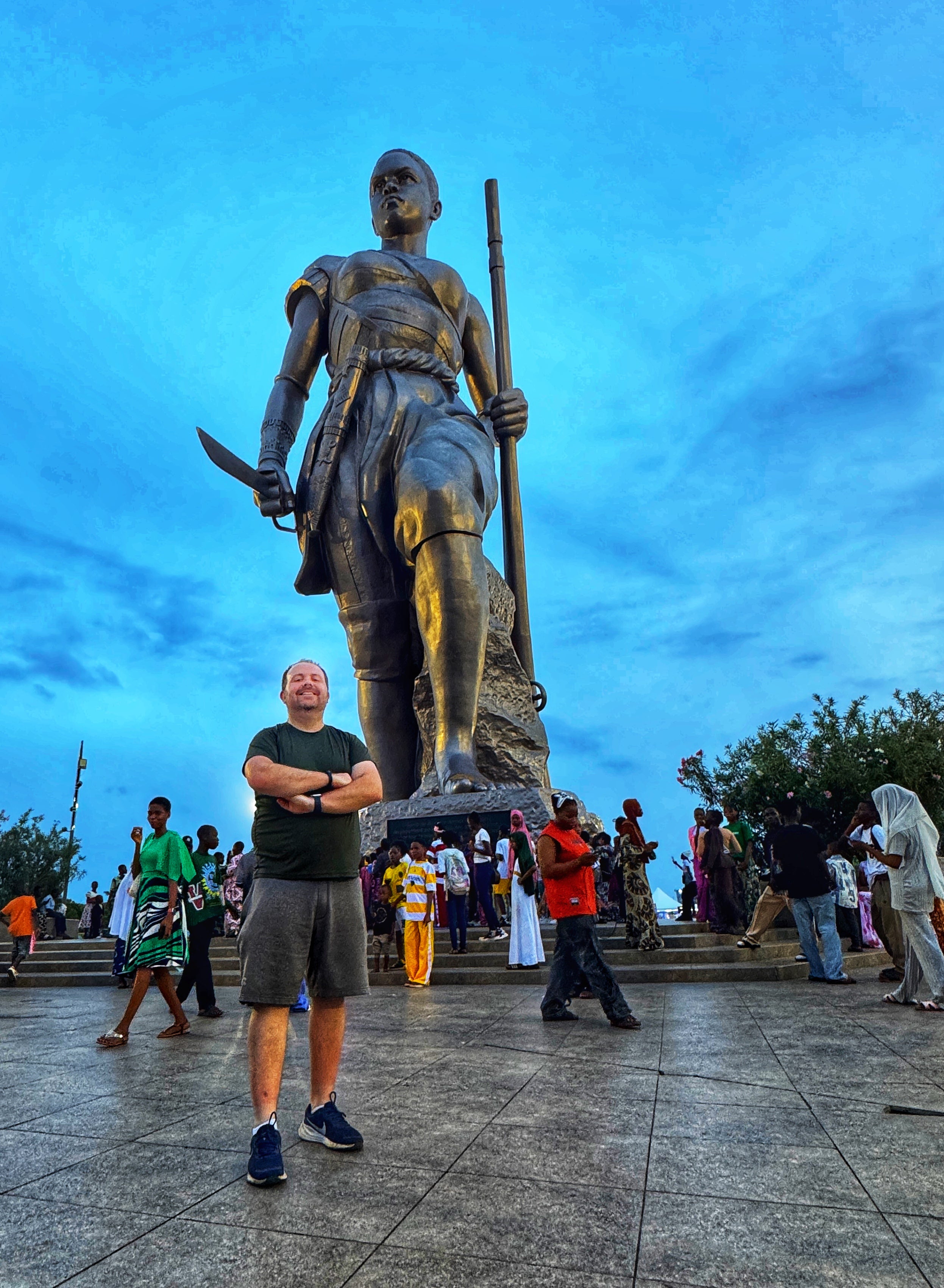
Nearby stands a 30-metre high bronze tribute to the Dahomey Amazons, the elite all-female military regiment that astonished 19th-century European visitors. Now the second tallest statue in Africa, it symbolises the pivotal role of women in Beninese history.
It's become a focal point of a country that’s a whirl of colourful motion, and is looking to a confident future without losing its grip on its complex history. Groups of schoolchildren climb onto the plinth and couples take selfies in front of their heroine who is both new and old simultaneously. Although this one isn’t wearing a spacesuit.
Read more: No crowds and comfort throughout – experiencing Africa’s wildest coast
How to do it
Return flights to from the UK to Cotonou start at £650 with Air France, with one connection, usually in Paris.
E-visas to Benin can be obtained at evisa.bj (£43 for single entry) and should be applied for at least seven days prior to travel.
Boats to Ganvié by taxi or zem can be booked on ride-hailing app Gozem.
For longer tours to Benin, and multi-country visits, booking through a specialist agency is recommended. Mowoki Tours, provide customised itineraries with an English-speaking guide and driver.
Where to stay
A short walk from the Marina Boulev’art, B&B Chez Rita is a quiet haven in Cotonou with five air-conditioned rooms, offering complimentary breakfast. Airport transfers are available. Rooms from £35 per night.
Casa Del Papa is a short drive from Ouidah and offers a pool, two restaurants and spacious clean rooms with lagoon or ocean views. Rooms from £105 per night.