ARTICLE AD
Wondering how to package your years of hard-won expertise into something clients can use on their own? Curious whether AI could turn your frameworks and processes into a product that generates recurring revenue?
In this article, you’ll discover how to identify the right opportunities to productize your expertise with AI, structure AI-powered tools using the IPO framework, and choose the best delivery method to build and sell AI tools to your clients.
This article was co-created by Kelly Sinclair and Michael Stelzner. For more about Kelly, scroll to the end of this article.
Why Expert-Backed AI Is the New Way to Productize Your Expertise
AI has commoditized knowledge. Anyone can ask ChatGPT how to write a pitch, build a content strategy, or analyze their marketing. But Kelly Sinclair says generic AI output lacks something critical: the lens of someone who has spent years refining what actually works.
Generic AI can produce a first draft of almost anything, but the user has no way to validate whether the output is any good. Expert-backed AI is different. It embeds an expert’s frameworks, decision-making patterns, and hard-won experience into the tool itself, so the output reflects tested methodology rather than generic best practices.
The distinction matters for how knowledge businesses can now operate. Digital courses teach people how to think. Adding AI tools to the mix lets people use an expert’s thinking. That shift from education to implementation changes the value proposition entirely.
Kelly points to a 2025 Thinkific study on digital course completion rates to illustrate the gap. Only 10% to 20% of buyers finish a traditional course. When AI tools are added to the mix, completion rates jump to 70% to 80%. The reason is straightforward: AI tools reduce the perceived heaviness of implementation. Clients who would otherwise stall on a blank page or skip a step they find tedious can now move through the process with guided support.
Kelly calls these AI-powered tool suites bot squads. Each bot squad is a collection of connected AI tools that walks clients through a multi-step process. She describes them as the natural evolution of how experts package and deliver their knowledge.
The goal isn’t to replace the expert with automation. Instead, bot squads handle the implementation layer while the expert adds coaching, office hours, or strategy sessions on top. Both components matter: the AI tools give clients momentum between touchpoints, and the human element keeps the experience personalized.
Now, rather than selling a one-time course that most buyers never finish, experts can offer bot squads on a subscription basis. Clients stay because they don’t want to lose access to tools that make their work easier, and the expert can focus on higher-order strategy conversations instead of answering the same foundational questions repeatedly.
#1: Identify What Customer-Facing AI Tools to Build: 4 Questions
Four diagnostic questions help surface where an AI tool would deliver the most value to your course or product line. Each targets a different friction point in the client experience.
Repetition: The first place to look is wherever clients ask the same questions over and over. Any topic that generates repetitive inquiries is a candidate for a tool that delivers those answers automatically, customized to each client’s situation.
Implementation Gap: The second signal is where clients consistently get stuck after receiving a strategy. Kelly encountered this in her own work as a brand and marketing strategist. She would build visibility strategies for entrepreneurs, and they would simply not take action. The gap between knowing what to do and actually doing it is where AI tools can provide momentum, guiding clients through each step rather than leaving them with a static plan.
Skip Zone: The third opportunity is the part of the process that clients avoid altogether. Every expert has at least one step that clients treat as optional even though it’s essential to getting results. Sometimes the resistance is about blank-page syndrome, where clients can’t get past a first draft. A tool that generates that starting point removes the friction. Kelly notes that clients often perceive these tasks as a heavy lift, and that perception alone keeps them from starting. When AI is part of the process, the perceived effort drops and the objection disappears.
Confidence Gap: The fourth area is mindset. Some clients understand the steps intellectually but lack the confidence to execute. A tool that provides guidance, feedback, or validation at the right moment can bridge that gap and keep them moving forward.

Which AI Moves Actually Matter?
That's what every marketer is wrestling with now. New AI strategies, new tools, new takes every week — but no clarity. Most marketers and business owners are trying to figure out AI alone.
The AI Business Society is your trusted guide. Get expert-led training you can put to work immediately. Plus a community of marketers sharing what's actually working.
These four questions can be explored through a conversation with any large language model. Feed it a description of an existing business, frameworks, and common client struggles, and it can help surface patterns that point toward the most impactful tool to build first.
#2: Structure Your AI Tools for Customer Use
Once the opportunity is identified, the next step is structuring the tool itself. Kelly uses what she calls the IPO framework: Input, Process, Output. This framework applies whether the goal is to productize expertise as a subscription-based AI tool or simply to automate a repeatable process.
The power of this framework is that it creates user-agnostic tools that produce user-specific results. The process stays the same for every user. The input is what changes, and that change drives a customized output.
Input: These are the details the customer brings to the tool. It might be their business description, their target audience, a set of data, or answers to a series of intake questions. The input is the variable that makes the output personal.
Process: This is where the expert’s value lives. It includes three components: a clearly defined goal for the tool (what is its job?), detailed instructions on what the tool should do, and resources that train the tool to do its job properly. Those resources might include transcripts from coaching calls, course content, templates, frameworks, worksheets, or examples of successful outputs. The more specific the training material, the more reliably the tool performs.
Output: This is the deliverable the customer receives. It should be defined clearly before building begins: a customized messaging document, a pitch draft, an audit report, or a content plan. Knowing the desired output shapes every decision about what input to collect and what process to design.
3 Real-Life Customer-Facing AI Tool Examples
Michelle, a messaging strategist with a doctorate in communications, built a bot squad called Moxie. Her clients’ biggest objection was that messaging work would take months. Moxie starts with voice-of-customer research: clients conduct the research, feed it into the tool, and Moxie analyzes it using Michelle’s methodology. It pulls out key patterns and transforms them into marketing messaging the client can use immediately. Michelle’s clients don’t need to learn research analysis; the tool applies her expertise for them.
Kelly’s first AI tool was Valerie the Visibility Auditor. As a visibility strategist, Kelly noticed her clients would default to posting on social media every day instead of pursuing higher-ROI activities like podcast appearances, networking events, or collaborations. Valerie asked clients to report what they did that week, then evaluated each activity against an ROI framework, redirecting them toward the strategies Kelly had built with them.
Nicole, a PR coach and journalist, built a bot squad with three connected steps. The first bot runs an intake process, asking the client a series of questions and generating a customized media messaging document. That document feeds into a second bot that researches podcasts matching the client’s specific business and topics, not just top podcasts by popularity. The third bot writes pitches in the client’s voice, drawing on the messaging guide.
3 Days of World-Class Training—Zero Travel!
Couldn't make it to Social Media Marketing World and AI Business World this year? Get all of the great content at a fraction of the price with a Virtual ticket.
That’s full access to recordings of every keynote, workshop, and session—the ones people travel thousands of miles to see. Don't wait. Get your Virtual ticket and enjoy actionable content that you can watch anytime, anywhere.
These tools don’t have to be client-facing only. Nicole uses her own bot squad for her own PR outreach, not just for her clients. Any expert can build these tools for internal use first, freeing up time spent on repetitive tasks, and then productize them for clients once the process is refined.
In all three cases, the IPO framework held. The input changed with each user; the process embedded the expert’s methodology; and the output was customized, actionable, and specific.
#3: Three Ways to Build and Sell AI Tools to Clients
With the opportunity identified and the tool structured, the next decision is how to build and deliver it. Kelly outlines three approaches, each with distinct tradeoffs.
Build Custom GPTs
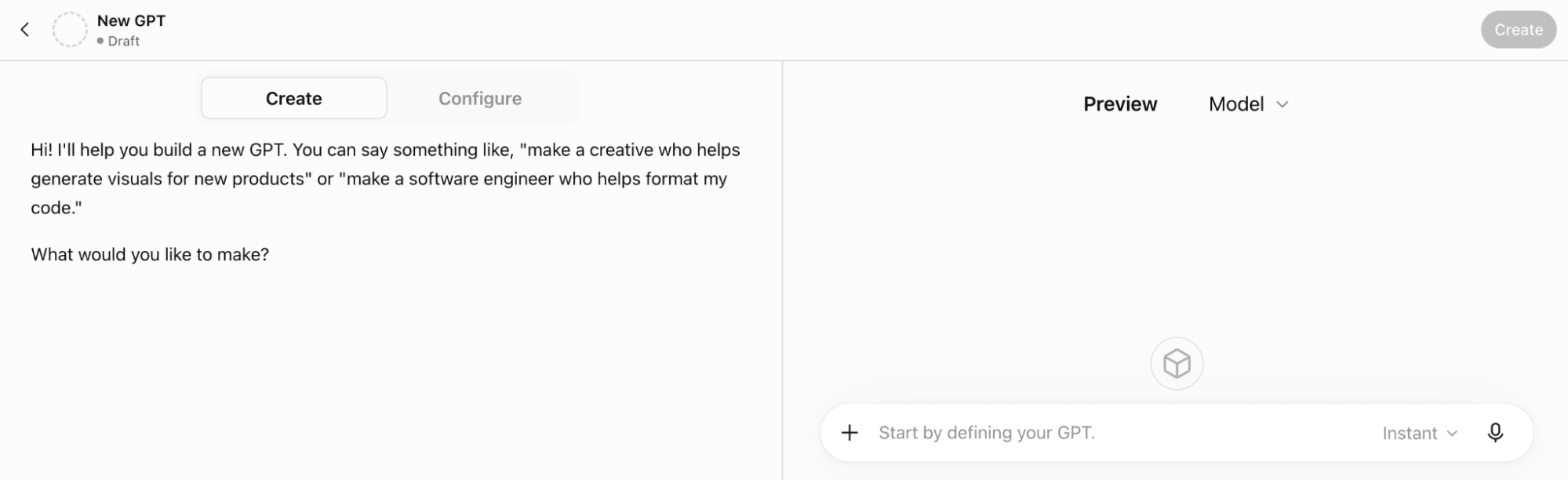
Custom GPTs inside ChatGPT are the simplest starting point. ChatGPT walks users through the creation process conversationally. The IPO framework applies directly: define what the user brings in, what the GPT should do with it, and what it should produce.
The limitations are real, though. Each custom GPT handles one job. For multi-step processes, clients end up with a PDF of links, copying output from one GPT and pasting it into the next. Security is another concern. GPTs can be shared via link, but access can’t be revoked when someone leaves a membership. Some creators password-protect their GPTs as a workaround, but managing password changes across a client base creates its own overhead. And because OpenAI’s underlying models shift, custom GPTs can break without warning.
Custom GPTs work best as a proof of concept or for single-step tools where access control isn’t critical.
Build Claude Skills
Claude Skills offer a significant upgrade in capability. Unlike siloed custom GPTs, a skill can orchestrate multiple steps in a single workflow, pulling information from different sources within a user’s Claude account. Kelly describes this as multi-agent orchestration: several things happening within one connected process.

Skills are also portable. Claude introduced the format, but ChatGPT, Gemini, and other platforms now support it. A skill built once can work across multiple AI platforms.
The subscription model applies naturally here. As an expert’s methodology evolves, the skill can be updated, and clients who want the latest version have a reason to maintain their subscription, similar to how software companies moved from one-time purchases to annual licensing.
The tradeoff is intellectual property exposure. Selling a skill means handing over what is essentially a zip folder of expertise. Whether that matters depends on the creator’s comfort level with how their frameworks are distributed.
Build Custom Software With Vibe Coding
The third option is building a standalone platform. Tools like Lovable allow non-developers to vibe code functional applications that handle hosting, security checks, and user management. For more sophisticated builds, coding tools like Claude Code and OpenAI Codex can generate the underlying code, though they require additional infrastructure for hosting and deployment.
Kelly emphasizes two things that matter most at this level: communication and organization. Being able to articulate clearly what a tool should do and being able to think in sequential steps are more important than technical knowledge. AI handles the code; the expert provides the clarity.
The deeper consideration at this level is whether the creator wants to run a software business. Multi-tenancy, where each user’s data stays isolated from every other user’s data, is a baseline requirement for any tool serving multiple clients. Access control, security, and ongoing maintenance come with the territory.
Kelly and her business partner, Andrew, a software developer, built wAIv (by Gravia Studio) to solve these exact problems. The platform lets creators build multi-step bot squads, manage client access from a single dashboard, deactivate users who leave a program, and choose the right LLM for each task rather than defaulting to the most expensive model for every job.
Pro Tip: Not every step in a bot squad requires the most advanced AI model. A simple intake process might run well on a lighter model like Claude Haiku, while a complex analysis step might need a more capable model. Matching the model to the task keeps costs manageable without sacrificing output quality.
#4: Test and Refine Your AI Tool Before You Launch It
Kelly stresses that testing is essential and often overlooked.
Because AI outputs are non-deterministic, the same prompt produces different results each time. When multiple users with different inputs are running through a tool, that variability multiplies.
The process layer of the IPO framework needs enough guardrails to keep outputs within an acceptable range regardless of what users bring to the input side.
That means running the tool with a variety of realistic inputs, checking whether outputs stay consistent with the expert's standards, and refining the instructions until they do.
Other Notes From This Episode
Connect with Michael Stelzner @Stelzner on Facebook and @Mike_Stelzner on X. Watch this interview and other exclusive content from Social Media Examiner on YouTube.Listen to the Podcast Now
This article is sourced from the AI Explored podcast. Listen or subscribe below.
Where to subscribe: Apple Podcasts | Spotify | YouTube Music | YouTube | Amazon Music | RSS
✋🏽 If you enjoyed this episode of the AI Explored podcast, please head over to Apple Podcasts, leave a rating, write a review, and subscribe.
Stay Up-to-Date: Get New Marketing Articles Delivered to You!
Don't miss out on upcoming social media marketing insights and strategies! Sign up to receive notifications when we publish new articles on Social Media Examiner. Our expertly crafted content will help you stay ahead of the curve and drive results for your business. Click the link below to sign up now and receive our annual report!
Curious About How to Use AI?
Our newest show, AI Explored, might be just what you're looking for. It's for marketers, creators, and entrepreneurs who want to understand how to use AI in their business.
It's hosted by Michael Stelzner and explores this exciting new frontier in easy-to-understand terms.
Pull up your favorite podcast app and search for AI Explored. Or click the button below for more information.