
ARTICLE AD
Having battled Force 5 winds and dramatic storms, ascended vast hills on a skateboard, and camped out solo, Becky Gilmour is no stranger to extreme adventures. And all while carrying a 15kg pack, including her own tent and supplies, plus the occasional tin of paint.
Gilmour describes herself as an adventure athlete and mental health advocate, and last year she became the first person to skateboard the world's longest coastal route, the Wild Atlantic Way, which runs a colossal 2,500km along the west coast of Ireland.
"It’s a bit crazy seeing a girl on a skateboard with a backpack, in the middle of nowhere. People would stop me and ask what on earth I was doing," she remembers.
The 26-year-old has since amassed an audience of more than 30K followers on Instagram, where she speaks candidly about her mental health. But a few years ago, adventures like this were the last thing on her mind.
Read more: The best road trips in Ireland Northern Ireland for breathtaking views
Gilmour had lost a close friend to suicide. “I really struggled to navigate that grief,” she recalls. She explains that it felt magnified by not being able to attend the friend’s funeral as it was in lockdown.
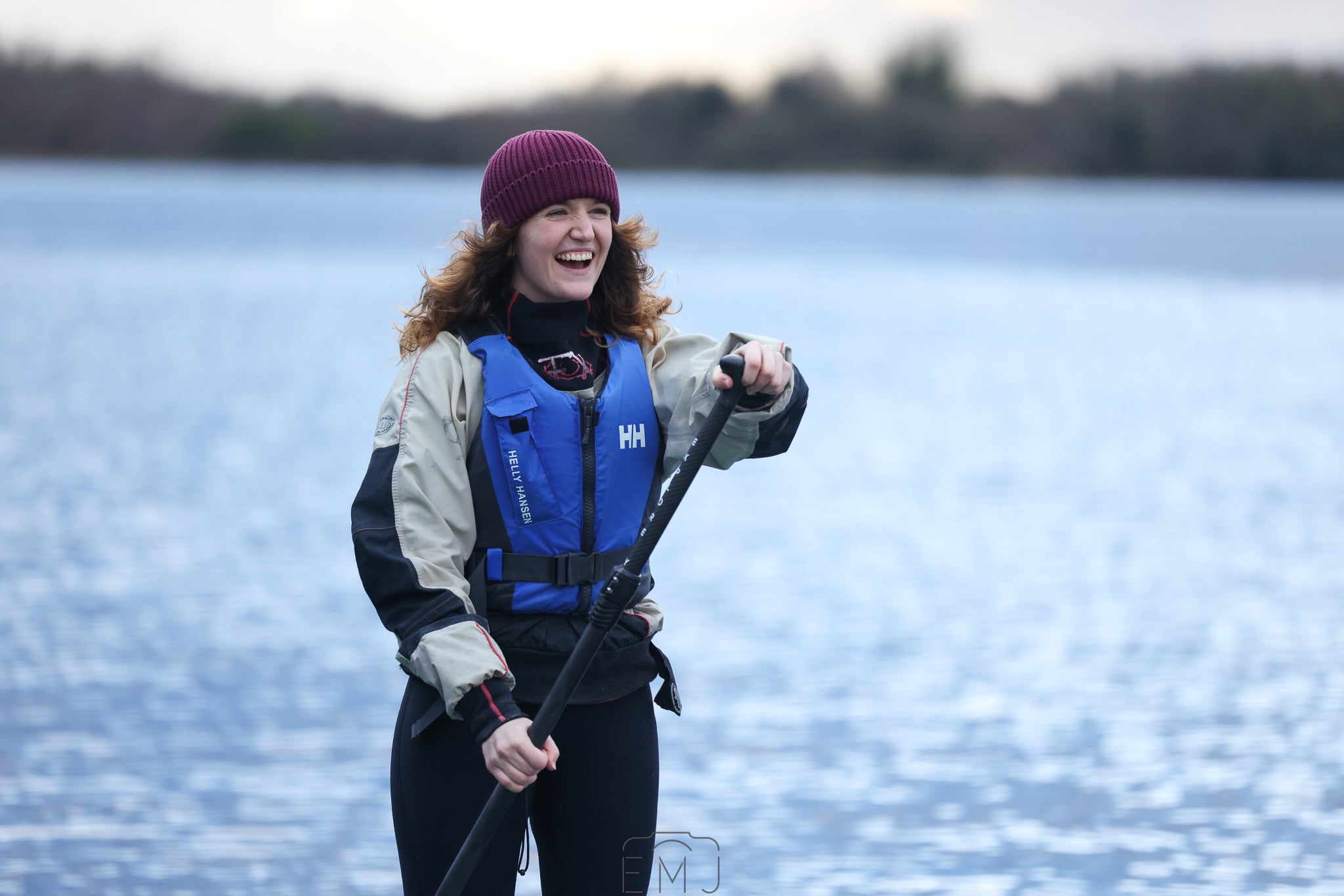
When I speak to Gilmour on the phone she is in the middle of her second ambitious challenge in a year – paddleboarding a staggering 1,000km (621 miles) solo across the width of Ireland.
“Eventually I reached a point where I needed to do something for myself and [my mental health]," Gilmour says, reflecting on the time after losing her friend.
Gilmour is from Banbridge, Northern Ireland, and says that the loss had brought up memories of the pair skateboarding together as teenagers around Portrush. These memories, combined with the need to find a way to cope with her grief, kickstarted Gilmour’s plan to complete the skateboarding challenge along the Wild Atlantic Way.
Stretching 2,500km (1,554 miles) along Ireland's western coastline, the route runs from the unspoilt region of the Inishowen Peninsula in Donegal in the north of Ireland, right down to the harbour town of Kinsale in County Cork in the south. The total cumulative elevation gain is almost three times the height of Mount Everest.
Despite only having several years of skating experience, and not having done it at all the year prior to the challenge – having suffered a bad accident that left her with a concussion – Gilmour wasn’t intimidated.
Setting herself a challenge was nothing new – adventure and travel has been a thread through Gilmour's life on and off since she was 18. She's traversed the width of Kenya twice using public transport, slept in Egypt's White Desert without a tent, hitchhiked the length of New Zealand twice, and travelled extensively through Uganda. "I like a challenge, but I never found it very fulfilling before. Knowing I’m helping other people in some way gives me a lot of purpose," she explains.
So this time when hitting the road, Gilmour decided to fundraise for the suicide-prevention charity Samaritans and raised £15,000 via a JustGiving page. "Every £10 raised is one potentially life-saving phone call funded for the Samaritans," she says.
Starting the challenge in June last year, Gilmour hoped it would take between four and six months. But what she hadn't fully anticipated was Ireland's weather. “There were around 10 days where my hair just didn't dry,” she laughs. “I was skating in storms and sleeping through storms. Once all your gear is wet, it's really difficult to get dry. It was so tough,” she says.
Read more: I travelled to Ireland’s remote islands for a wild weekend away
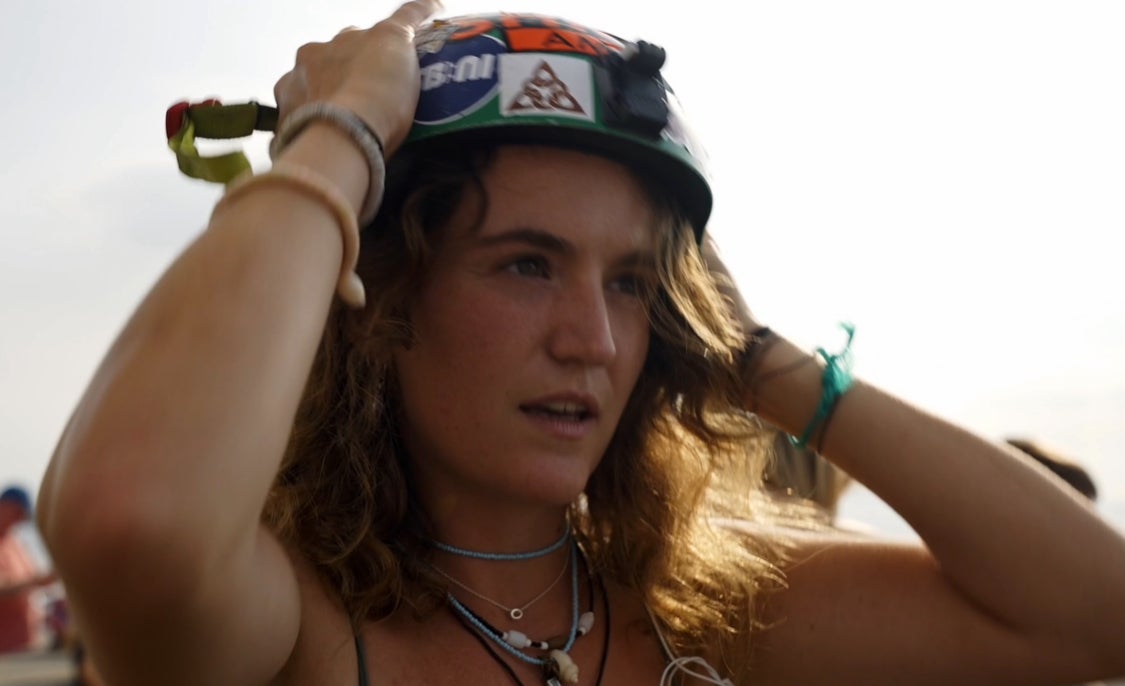
Carrying 15kg on her back, wearing a hi-vis jacket and a green helmet covered in stickers with her wavy brown hair poking out, Gilmour covered between 20km and 60km (12.4 to 37 miles) a day throughout the challenge, which ended up taking six and a half months.
"I knew it would be hilly; I signed up for that," she says. Yet she ramped up the challenge by adding some of the coastal islands off the route to her journey, which she either reached via ferry or by hiring a paddleboard. And in spite of "insane hills and elevation", Gilmour refused to walk, as she knew: "if I walked one hill, I'd walk them all."
The downhills proved trickier; when the roads were wet (as they often were), stopping became nearly impossible. “At the start, I was skating at 4am when the roads were empty and bombing hills. I'd check Strava and try to beat my speed every day.” Then came the inevitable crash. “I absolutely stacked it on a mountain," she says. This was a turning point – she realised that if she wasn't more responsible, she wouldn't make it to the end of the challenge.
Yet the most memorable parts of the journey weren’t marked by injuries, kilometres or speeds; it was the people she met along the way, who made her feel like she wasn’t doing this challenge alone. "It's hard to say it was unsupported, because I got so much help from strangers," she says.
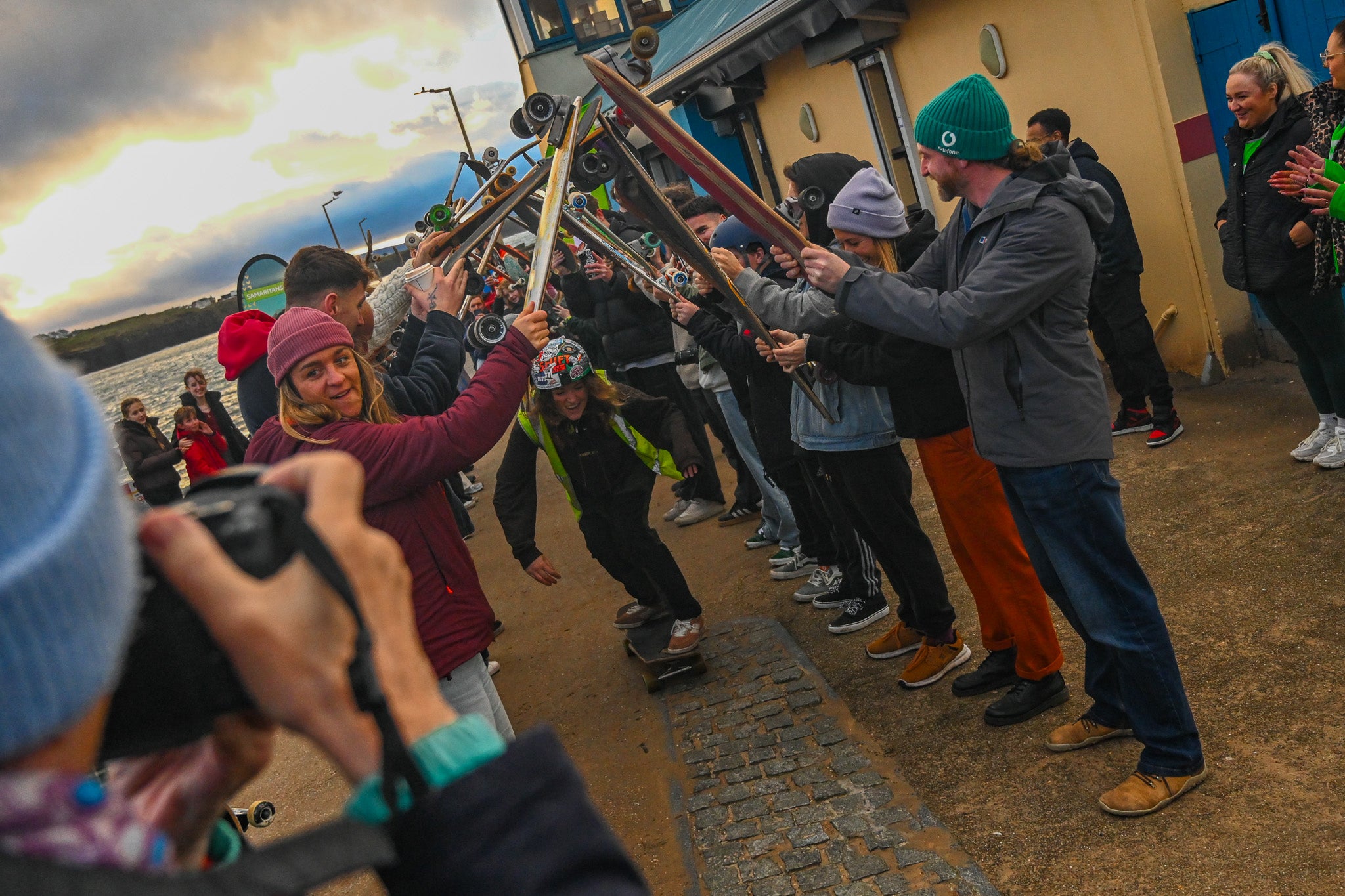
One woman pulled over to speak to Gilmour and offered to take her bag to the next town, after recognising her from news coverage when local papers had started picking up her story. News travels fast in Ireland, Gilmour tells me.
“She had tears in her eyes. I just knew we related to each other when it came to suicide loss," Gilmour recalls.
That moment changed her understanding of what the journey had become. “I realised the trip had been so healing for me. It was meant to become about community and asking for help and getting other people involved."
Often people would be waiting for her arrival, spurring her on, giving her food and offering a warm bed, which was most helpful during winter when Gilmour had a severe chest infection.
Gilmour's way of giving back was to paint murals in each county she visited, as her former career was as a mural artist. She carried paintbrushes, bought paint tins where she could (and sometimes had to carry them with her, adding more weight), though bad weather put a stop to her painting plans during winter.
The experience also transformed how she saw Ireland. Gilmour fell in love with it again, blown away by the beauty of places she previously knew little about. She wants to go back to Lough Hyne in County Cork to snorkel, for example. The marine nature reserve is famous for its biodiversity, and after she skated up to it, a man asked if she'd brought goggles. "When I said 'no’, he told me I'd wasted my trip,” she laughs.
Gilmour finished the challenge in mid-December 2025. “It was such a massive thing physically and emotionally," she says. But soon she found herself ready for more, and another idea emerged.
Her next challenge saw her paddle across Ireland to raise money for a psychiatric hospital in Uganda whose services have been devastated by funding cuts, shrinking a team of 17 to just two nurses, with a patient list of 1,200 people. Her days were spent paddling between 20km and 50km (12.4 to 31 miles), and on one day, going into Dublin, she carried her board and kit through 13 locks in a single day. "My hips are covered in bruises," she says.
These challenges may seem daunting, but Gilmour is full of positivity, and is keen to stress to her social media audience that adventure isn't reserved for elite athletes or people with large budgets. For her, "movement has always been a massive coping mechanism”.
What started as a way to cope has affirmed her belief in the kindness of strangers, human connection and the importance of community. And while the fundraising matters, so too does her message that “the outdoors has a massive part to play in mental health”.
“It teaches you to be mindful and present,” she says.
If you are experiencing feelings of distress, or are struggling to cope, you can speak to the Samaritans, in confidence, on 116 123 (UK and ROI) or visit the Samaritans website to find details of your nearest branch.
You can donate to Becky Gilmour’s JustGiving page here.