
 3 months ago
5
3 months ago
5 ARTICLE AD
The following poems are from Darkening Mirror, the first full-length English translation of poetry by Wang Jiaxin. A poet, essayist, and literary critic, Jiaxin has published more than forty books, including Chinese translations of Yeats, Tsvetaeva, Mandelstam, and Paul Celan. As a poet he draws inspiration from classical Chinese poetry and philosophy, especially the works of Du Fu. The poems below follow Jiaxin’s travels to various Buddhist sacred sites, including Wutai Mountain, considered one of the four sacred mountains in Chinese Buddhism and home to the bodhisattva Manjushri.
Meeting Rain, Wutai Mountain
After five hundred li of dusty road,
we drove through a red canyon
as thunder boomed over the mountain,
rain right on our heels.
Mist rose,
the mountaintop temple veiled in the shower.
It came so indulgently, luxuriously,
my teeth chattered.
I recall my parched thirst on the way,
and later, the strange wooden fish in the monk’s hand,
in my dreams a rush
of streaming water.
Awake. Last night’s fruit pits tossed out the window
already beaten into muddy earth.
Rain clears, the day’s trees,
the rocks, the temple shining.
Then morning’s windchime,
and across the mountain slope,
a drift of chanted sutras.
Kumbum Monastery
That mysterious Bo tree
ringed by this tower
for centuries, worshiped
by those who kiss the earth,
its root emerging from the dark
fifty meters past the wall,
in the wind its new blossoms
speaking a language
we grasp even less.
Tang Xuan Zang in Qiu Ci, 628 A.D.
So bitter is life,
if there’s reincarnation,
I’d like to be a bird
winging through the sky.
Not walking the ground,
crossing the oven of Fire Mountain,
where sand grinds my teeth
and stones bruise my heels.
I collapse in my sweat several times
like a dying camel.
So many fiendish scenes. Not just the Bull King
grinning in my dreams, soundlessly pursuing,
but nameless tricksters,
twist-faced demons
scaring me night after night,
proof my sacred charge
entails humiliation.
I wake to a bleak world,
a dead mountain,
a desert of gravel without one blade of grass.
Over a ruined temple, the jagging rasp of cicadas
more terrifying than tigers’ roars,
wolves from childhood.
And thus I know whose envoy I must be.
Once more I drag myself westward,
but a figure stands before me,
trudging as I trudge,
pressing on when I halt
in the blaze of absolute noon.
If he stops, the sliding dunes will swallow him.
Note: The speaker is the Tang dynasty monk and translator Tang Xuan Zang (602–664 CE) who helped bring Buddhism and its sutras to China. Immortalized in the Chinese classic novel Journey to the West, his trek from the ancient capital of Chang’an (Xi’an) to India involved arduous adventures. Here he crosses the kingdom of Qiu Ci, an area now known as Kucha or Kuche in Xinjiang Province, where he encountered the “Bull King” (Niu Mo Wang), a bullheaded demon who controlled Fire Mountain, bringing heat and drought to the region.
♦
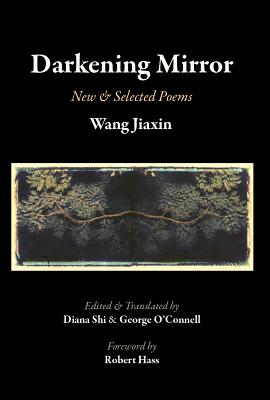
From Darkening Mirror by Wang Jiaxin, translated by George O’Connell and Diana Shi. Reprinted by permission of the author.

Thank you for subscribing to Tricycle! As a nonprofit, we depend on readers like you to keep Buddhist teachings and practices widely available.