 3 months ago
8
3 months ago
8 ARTICLE AD
The influential yet controversial teacher is credited for establishing a Karma Kagyu offshoot for lay practitioners.
By Joan Duncan Oliver May 30, 2026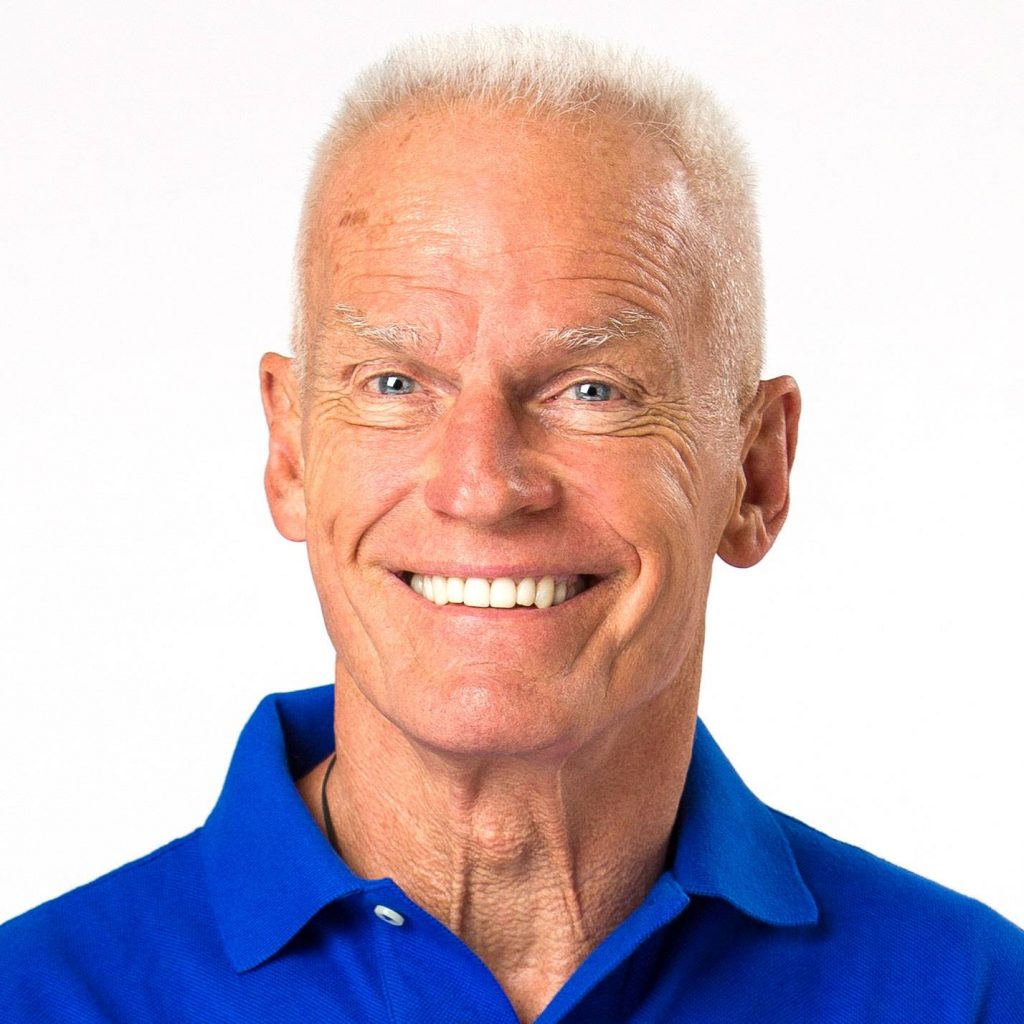 Ole Nydahl. | Image via Facebook.
Ole Nydahl, an influential yet controversial Karma Kagyu teacher known to devotees as Lama Ole, died on May 18, 2026, at the Europe Center (the International Diamond Way Buddhist Center) that he founded in Immenstadt im Allgau, Germany, in the Bavarian Alps. Age 85 at his death, Nydahl had spent more than forty years traveling the globe, teaching and establishing outposts of Diamond Way Buddhism, his particular brand of Karma Kagyu teachings for lay practitioners. A protégé of the Sixteenth Gyalwa Karmapa, Rangjung Rigpe Dorje, Nydahl made a name for himself as a charismatic teacher with a large and loyal following, but to disaffected students, he was the head of a personality cult.
Lama Ole and his first wife, Hannah Nydahl, founded Diamond Way Buddhism in 1972 at the request of the Karmapa. An offshoot of the Karma Kagyu tradition, it was conceived to bring Tibetan Buddhist teachings to lay practitioners in the West. By the time of his death, Lama Ole had established more than 650 Diamond Way centers in some sixty-five countries throughout Europe, South America, Asia, and the United States, and had set up the Diamond Way Buddhism Foundation to support humanitarian projects. Until 2017, when health issues curtailed his schedule, Lama Ole had spent nearly every day of every year traveling between the centers to give lectures, teachings, and empowerments.
Though he taught phowa (conscious dying), guru yoga, ngondro (the preliminary practices), and Chenrezi (bodhisattva of compassion) meditation, Lama Ole’s main focus was Mahamudra, or the Great Seal, teachings on the nature of mind. Determined to free the Diamond Way of Tibetan customs and traditional hierarchy and make the Vajrayana teachings widely available, with the exception of certain sacred texts, he taught the practices in English. Many of the texts were translated by Hannah Nydahl, who died in 2007. (Lama Ole subsequently married again twice and had a partner for some years. Depending on the source, he fathered two or three children.)
Lama Ole’s widespread popularity has never been disputed. Estimates of his followers vary from 15,000 to 70,000 or more worldwide. Bee Scherer, professor of Buddhist studies and gender studies at Canterbury Christ Church University in the United Kingdom, called the Diamond Way “arguably the largest convert Buddhist movement in Central and Eastern Europe.” The Fourteenth Shamar Rinpoche, known as the Shamarpa—the second-highest lama in the Karma Kagyu hierarchy—went so far as to write in his biography of the Sixteenth Karmapa that “it was Lama Ole who made the Karmapa’s name be renowned,” adding that Lama Ole’s work, in turn, was “the result of Gyalwa Karmapa’s activity.” In Denmark, Ole’s country of origin, he was hailed as “the most lasting influence on the Buddhist practice scene” and an “icon of living Buddhism.”
Not everyone was quite so generous, despite Lama Ole’s résumé. In the late 60s, Ole and Hannah, honeymooning in the Himalayas (“because they had good hash,” Ole later said), studied with their first teacher, the Drukpa Kagyu master Lopon Tsechu Rinpoche, and took refuge with the Sixteenth Karmapa. They also studied with such venerable teachers as the Third Jamgon Kongtrul, Mipham Chokyi Lodro, Kalu Rinpoche, and the phowa master Ayang Rinpoche, and received teachings and empowerments from other high lamas, including Dilgo Khyentse Rinpoche, Bokar Rinpoche, and even the Fourteenth Dalai Lama. On their return to Europe in 1972, Ole and Hannah were asked by the Sixteenth Karmapa to set up meditation centers and begin teaching Buddhism. From then on, Ole Nydahl styled himself Lama Ole, despite critics who said he wasn’t qualified to do so, not having met all the requirements of a Vajrayana lama, such as completing the traditional three-year meditation retreat. However, according to Ole, he and Hannah had been recognized by the Sixteenth Karmapa as lamas “from a previous lifetime,” and years later the Fourteenth Shamarpa declared Lama Ole a “Buddhist master,” saying it was “absolutely appropriate” for him to hold the title of lama.
Lama Ole’s critics were not silenced, nonetheless. Some of the Karma Kagyu hierarchy took issue with Ole’s unorthodox ways and what they saw as his oversimplification of the teachings. Others were more generous, finding a precedent in the “crazy wisdom” and lay yogis of Tibetan history. When his authority was questioned, Lama Ole usually countered that he taught only what the Sixteenth Karmapa had asked him to pass on and that “its basis was always the guru yogas of the Karmapas.”
To some, controversy over Lama Ole served as a useful distraction from the weightier controversy that arose in 1992 after the Sixteenth Karmapa died and the search for his successor turned up not one but two claimants, causing a major rift in the Karma Kagyus. One candidate for the role of Seventeenth Karmapa, Ogyen Trinley Dorje, was endorsed by the Dalai Lama, the Chinese government, and the Karma Kagyu master Tai Situ, while the other, Trinley Thaye Dorje, was backed by Shamar Rinpoche and therefore by Lama Ole. Fueling the schism was the break with Karma Kagyu tradition, under which the Shamarpa is responsible for identifying the next Karmapa.
Ole Nydahl was no stranger to controversy, thanks in part to his unusual background. He was born near Copenhagen in 1941 during World War II, when Denmark was under German occupation. His parents were members of the Danish resistance. In his youth, Nydahl later said, “my brothers and I spent our whole time fighting with other kids. and became very good at it.” He lived fast, favoring motorcycles and race cars. After a brief tour in the Danish army, he earned a degree (with highest honors) from the University of Copenhagen. Along the way, he made several trips to Nepal, financing his travels, as he wrote in his autobiography, by smuggling and selling drugs. Lama Ole dismissed those activities and subsequent arrest for smuggling as “youthful folly” and claimed he passed the time in a Danish jail by meditating and reading Walter Evans-Wentz’s Tibetan Yoga and Secret Doctrines. In his later years Lama Ole and his stewardship of Diamond Way Buddhism drew criticism for his right-wing political views, authoritarian leadership, disrespect for women and LGBT rights, and his very public and vitriolic condemnation of Islam.
Through it all, Lama Ole managed to maintain the loyalty of his devout followers and, on his death, to earn high praise from the Seventeenth Karmapa Trinley Thaye Dorje, who wrote that “everyone who met him will remember Lama Ole’s deeply human qualities: his honesty, directness, courage, humor, and his ability to inspire confidence and joy in others.” Presumably, those qualities also informed the books Lama Ole wrote in English, German, or Danish. Widely translated, they include The Way Things Are: A Living Approach to Buddhism (1997); Buddhism and Love: Timeless Wisdom for Modern Relationships (2012); Entering the Diamond Way: Tibetan Buddhism Meets the West (2012); Fearless Death: Buddhist Wisdom on the Art of Dying (2013); Practical Buddhism: the Kagyu Path (2023); and Teachings on the Nature of Mind (2023).

Thank you for subscribing to Tricycle! As a nonprofit, we depend on readers like you to keep Buddhist teachings and practices widely available.