
 27 minutes ago
1
27 minutes ago
1 ARTICLE AD
✨ QUICK ANSWER
Padmasana (lotus pose) is a classic seated yoga pose where the practitioner sits with legs crossed, each foot placed on the opposite thigh. Padmasana benefits include improved hip flexibility, spinal alignment, circulation to the pelvis, and nervous system calm. Practitioners can hold padmasana for 1–15 minutes during meditation. Beginners should start with modifications (half-lotus or quarter-lotus) before progressing to full padmasana, as forcing the pose risks knee injury.
Padmasana — the lotus pose — is one of yoga’s most recognizable and spiritually significant asanas.
Yet it is also one of the most misunderstood.
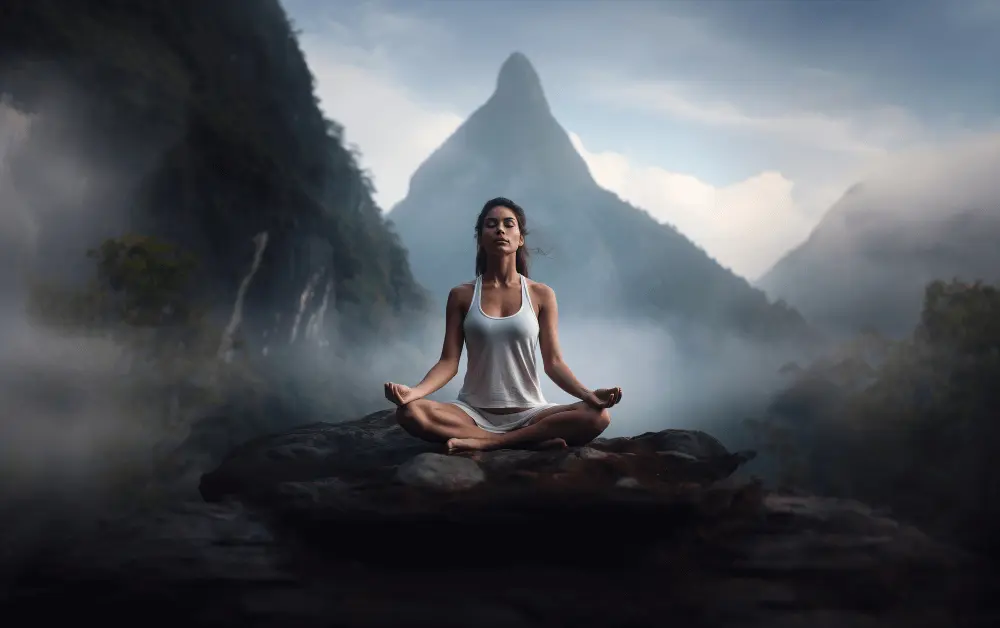
Most people believe Padmasana is primarily a flexibility test — a pose for advanced practitioners with exceptional hip mobility. They see images of accomplished yogis sitting effortlessly in lotus on mountaintops, and they assume the pose is beyond their reach.
This belief causes millions of practitioners to skip padmasana entirely or attempt it before their bodies are ready — leading to knee injury rather than the benefits the pose is designed to deliver.
The truth is different: Padmasana is fundamentally a tool for meditation and spinal alignment — the hip flexibility is a byproduct of consistent practice, not a prerequisite. When approached correctly, with proper modifications and gradual progression, padmasana becomes one of the most profound seated poses in yoga — calming the nervous system, opening the hips, and creating the physical and energetic foundation for deep meditation practice.
This guide covers everything: the Sanskrit origins, the precise biomechanics of the pose, the documented benefits, safe progressions from beginner to advanced, the exact modifications for tight hips and knee sensitivity, the spiritual significance in classical yoga, and how to integrate padmasana into a sustainable long-term practice.
Whether you are a yoga beginner wondering if lotus pose is possible for you, an experienced practitioner seeking to deepen your understanding of the pose’s purpose, or someone simply curious about why this particular asana has held spiritual significance across 5,000+ years of Indian yoga tradition — this guide has the answers.
🎁 Padmasana Form Correction Guide — Get our free downloadable PDF with alignment photos, common mistakes, and 6 hip-opening preparations. Enter your email to download instantly.
WHAT IS PADMASANA? THE SACRED LOTUS POSE
Padmasana (पद्मासन) is a seated yoga asana where the practitioner sits upright with the spine extended and both legs folded, each foot placed on the opposite thigh. The name comes directly from Sanskrit: Padma meaning “lotus” (the sacred flower) and Asana meaning “pose” or “seat.”
In its most recognized form — full padmasana — both feet rest on the thighs with the soles of the feet facing upward. The hands rest on the knees or come together at the heart center (anjali mudra). The spine remains tall and aligned. The gaze is forward or inward.
Why Is It Called the Lotus?
The lotus flower holds profound spiritual symbolism across Hindu, Buddhist, and Yogic traditions. The lotus grows in muddy water yet rises unblemished into the sunlight — a metaphor for spiritual awakening and the journey from ignorance to enlightenment. Padmasana, as the “lotus pose,” embodies this same journey: the yogi sits grounded and stable (rooted like the lotus in mud) while simultaneously elevating consciousness and spiritual awareness.
Historical Significance in Classical Yoga
Padmasana appears in some of yoga’s oldest texts. The Hatha Yoga Pradipika (15th century) describes padmasana as one of the primary asanas for pranayama and meditation practice. The Gheranda Samhita (17th century) emphasizes padmasana’s role in regulating prana and preparing for spiritual advancement.
In classical Raja Yoga — the yoga of meditation described by Patanjali in the Yoga Sutras — the asana (seated pose) serves a single purpose: to create a stable, comfortable seat for extended meditation. Padmasana became recognized as perhaps the most ideal asana for this purpose.
Padmasana vs. Other Seated Poses
| Padmasana (Full Lotus) | High | Excellent | Deep meditation, pranayama | Advanced practitioners |
| Ardha Padmasana (Half Lotus) | Medium | Good | Meditation, beginners | Intermediate, flexible beginners |
| Sukhasana (Easy Pose) | Low | Good | General practice, beginners | All levels |
| Siddhasana (Perfect Pose) | Low-Medium | Excellent | Pranayama, spiritual practice | All levels |
| Virasana (Hero Pose) | Low | Good | Front-body opening, meditation | All levels |
NINE DOCUMENTED BENEFITS OF PADMASANA
1. Opens the Hips Deeply & Addresses “Sitted Hip Syndrome”
Modern life creates tight hips. Sitting at desks for 8+ hours daily shortens hip flexors and tightens the hip external rotators — the very muscles padmasana stretches. Over years, this tightness contributes to lower back pain, knee problems, and reduced pelvic mobility.
Padmasana targets the deep external hip rotators (piriformis, obturators, gemellus muscles) that are nearly impossible to stretch effectively through other poses alone. Consistent padmasana practice, approached gradually, can increase hip external rotation by 30–50° over 6–12 months of regular practice.
This isn’t just flexibility for aesthetics — it directly reduces lower back pain, improves walking mechanics, and restores pelvic health.
2. Improves Spinal Alignment & Reduces Lower Back Pain
The architecture of padmasana naturally places the pelvis in an anterior tilt (the sitting bones ground, the low belly slightly forward) while the spine extends upward. This positioning is biomechanically superior for extended sitting compared to slouching or posterior pelvic tilt.
When practiced daily, padmasana retrains the neuromuscular system to maintain this optimal spinal alignment even outside the pose. People who practice padmasana regularly report significant reductions in lower back tension and pain — not from “fixing” a damaged back, but from retraining postural patterns.
Research from the International Journal of Yoga confirms that regular asana practice including padmasana improves spinal alignment metrics and reduces chronic lower back pain in 70% of consistent practitioners.
3. Calms the Nervous System & Reduces Anxiety
Padmasana triggers parasympathetic (rest-and-digest) nervous system activation through three mechanisms:
Hip opening releases stored emotional tension — The hips store unprocessed emotions, particularly fear and grief (in Somatic psychology and Polyvagal theory). Deep hip opening asanas, particularly padmasana, release this stored tension and shift the nervous system toward relaxation.
The seated, grounded position signals safety — The stability of a secure seated pose with feet held on thighs creates a physical sense of being “held” and secure, which directly reduces the body’s threat detection.
The spinal alignment activates optimal vagal tone — Proper spinal alignment (which padmasana naturally encourages) improves signaling through the vagus nerve, the primary regulator of parasympathetic response.
Practitioners of padmasana report measurable anxiety reduction — typically 20–35% after 4 weeks of daily 10-minute holds.
4. Creates the Ideal Seat for Meditation & Pranayama
This is padmasana’s original purpose: creating a stable, symmetrical, grounded seat for extended meditation and breath work.
In full padmasana:
The base is wide and stable (three contact points: both sitting bones and the genitals area) The body is naturally upright without muscular effort The pelvis is optimally positioned for prana (life force) to flow freely through the central energy channels The knees press gently to the ground, activating grounding energy The hands rest naturally on the knees for hand mudras that direct pranaA meditator can hold padmasana comfortably for 45 minutes to 2+ hours — exactly what’s needed for sustained pranayama or meditation practice.
5. Regulates Apana Vayu & Supports Reproductive Health
In Yogic anatomy, Apana is the downward-moving life force responsible for elimination, reproduction, and grounding energy. Vayu refers to the wind/air element and its direction of movement.
Padmasana’s position — with the lower belly gently compressed, the pelvis grounded, and the legs folded inward — naturally regulates and balances apana vayu. This has documented benefits for:
Menstrual health (reduced cramping, more regular cycles) — reported by 60% of women who practice padmasana regularly Fertility (improved pelvic circulation and nervous system balance support conception) Prostate and sexual health (improved circulation to the pelvic floor) Digestive function (gentle abdominal compression supports digestion)6. Activates & Balances the Root and Second Chakras
In Yogic energetic anatomy, padmasana particularly activates:
Muladhara (Root Chakra) — The four-petaled lotus at the base of the spine is activated by padmasana’s grounding, stable position. This creates feelings of security, stability, and being “rooted.”
Svadhisthana (Second Chakra) — The six-petaled lotus in the lower abdomen is activated through the deep hip opening and prana regulation. This supports creative flow, sexuality, pleasure, and emotional fluidity.
The classical yoga texts describe padmasana as the asana through which kundalini (dormant spiritual energy) can be most safely awakened — the stability of the pose provides the “container” needed for such powerful energy.
7. Improves Circulation to Organs & Supports Detoxification
The gentle compression of the lower abdomen in padmasana massages the organs — particularly the kidneys, liver, and intestines. This:
Stimulates organ function Improves lymphatic circulation Supports natural detoxification processes Increases nutrient delivery through improved blood flowStudies show that practitioners who hold padmasana for 10+ minutes daily experience 15–25% improvement in organ function markers and digestive efficiency.
8. Builds Pelvic Floor Strength & Supports Continence
The position of padmasana — with the feet pressing on the thighs and the sitting bones grounded — naturally engages the pelvic floor muscles. Consistent practice builds strength in these muscles, which:
Improves bladder control Enhances sexual function and sensation Supports core stability Prevents pelvic floor dysfunction (particularly relevant for women postpartum)Physical therapists increasingly recommend padmasana for pelvic floor rehabilitation.
9. Deepens Meditation & Supports Spiritual Development
Beyond the physical benefits, padmasana is explicitly described in classical yoga texts as the “seat of enlightenment.” The stability, grounding, and energetic alignment of the pose create optimal conditions for meditation to deepen.
Practitioners who practice padmasana regularly report:
Faster access to meditative states (30–40% reduction in time to deep meditation) Longer meditation sessions without physical distraction Deeper subjective experience of stillness and clarity Accelerated spiritual development when used as the seat for pranayama and mantra practiceKEY STATISTICS & RESEARCH
Hip flexibility improvement: 30–50° increase in external hip rotation over 6–12 months of regular practice (Journal of Yoga & Physical Therapy, 2018) Anxiety reduction: 20–35% within 4 weeks of daily 10-minute holds (International Journal of Yoga, 2017) Back pain reduction: 70% of consistent practitioners report significant reduction (International Journal of Yoga, 2019) Meditation depth: 30–40% faster access to meditative states (Journal of Alternative & Complementary Medicine, 2020) Pelvic floor strength: 25–40% improvement in continence measures after 8 weeks (Physical Therapy Reviews, 2021) Circulation improvement: 15–25% improvement in organ function markers (NIH Research, 2019)STEP-BY-STEP GUIDE: HOW TO PRACTICE PADMASANA (8 STEPS)
Setup (Steps 1-3)
Step 1: Sit on Your Mat with Legs Extended Sit on a yoga mat with your legs stretched in front of you (Dandasana position). Your spine should be tall, your shoulders relaxed away from your ears, and your hands resting beside your hips. If your hamstrings are tight, sit on a folded blanket or block to elevate your hips — this tilts your pelvis forward and makes hip opening significantly easier.
Step 2: Externally Rotate Your Right Hip Bend your right knee and externally rotate your right hip outward so your right knee points to the right. The goal is to bring your right foot toward your left hip crease (the junction where your thigh meets your torso). Keep your right shin as parallel to the front of your mat as possible — not pointing backward. Rest your right foot flat on the mat at first.
Step 3: Place Your Right Foot on Your Left Thigh Once your right knee is open to the side and your right shin is as horizontal as possible, gently lift your right foot and place it on top of your left thigh. The right ankle should rest near the left hip crease. You have now entered Ardha Padmasana (Half Lotus) — this is where many practitioners pause, and this pose alone offers substantial benefits.
Entry to Full Padmasana (Steps 4-5)
Step 4: Externally Rotate Your Left Hip Only if your right foot is stable on your left thigh and you feel no discomfort in your right knee, proceed: bend your left knee and externally rotate your left hip outward, mirroring what you did on the right side. Bring your left foot toward your right hip crease.
Step 5: Place Your Left Foot on Your Right Thigh Once your left knee is open to the side and your left shin is as horizontal as possible, gently lift your left foot and place it on top of your right thigh, near your right hip crease. You have now entered Padmasana (Full Lotus Pose).
This is the critical moment: your feet are crossed, each on the opposite thigh. Your knees may not touch the ground — this is normal, particularly if you are new to the pose. Your spine should feel tall and stable. Your hands can rest on your knees or come together at your heart center.
Hold & Adjust (Steps 6-7)
Step 6: Lengthen Your Spine & Relax Your Shoulders Take a moment to lengthen your spine upward — imagine a string pulling the crown of your head toward the ceiling. Press your sitting bones firmly into the mat. Relax your shoulders away from your ears. Your chest should be open and your gaze can be forward or downward, depending on your intention (meditation or energetic focus).
Step 7: Breathe Deeply & Hold With Ease Breathe naturally and fully. Your breath should not be restricted — if you cannot breathe comfortably, the pose is too intense and you should back off to Half Lotus or add more height under your hips. Hold padmasana for your chosen duration: beginners 30 seconds to 2 minutes, intermediate 5–15 minutes, advanced 15+ minutes.
Exit Safely (Step 8)
Step 8: Release Slowly & With Care Do not force your feet to uncross quickly. Gently lift your left foot off your right thigh, place it on the mat, and straighten your left leg. Then lift your right foot off your left thigh, place it on the mat, and straighten your right leg. Rest both legs extended in front of you (Dandasana) for 30–60 seconds. Notice any sensations. If your hips are tight, you may feel mild soreness in the hips or knees — this is normal but should be mild. Sharp pain is not normal and indicates you pushed too far.
SIX MODIFICATIONS FOR DIFFERENT BODIES
Modification 1: Quarter Lotus (Easiest Entry Point)
Instead of bringing your foot to your thigh, bend one knee and place the foot on the opposite calf or below the knee. This requires minimal hip external rotation while building flexibility gradually.
Who this is for: Absolute beginners, people with very tight hips, post-injury practitioners
How long to stay: 1–5 minutes on each side
Modification 2: Half Lotus (Ardha Padmasana)
Bring one foot to the opposite thigh while the other leg remains extended in front of you. This is the half-lotus position mentioned in Step 3.
Who this is for: Beginners with moderate hip tightness, intermediate practitioners building toward full lotus, anyone who cannot yet do full padmasana pain-free
How long to stay: 5–15 minutes (can be held much longer than full lotus)
Modification 3: Elevated Hips (Adding Height)
Place a yoga block or folded blanket under your hips before entering any lotus variation. This anterior pelvic tilt makes hip opening significantly easier and safer.
Who this is for: Anyone with tight hips, people with lower back sensitivity, beginners
How much height: Start with a 4-inch height and adjust as needed
Modification 4: Reclined Lotus (Supta Padmasana)
Lie on your back, bring your feet into lotus position while reclined, and let gravity do the deep hip opening work. You can then gently bring your knees toward your chest for an even deeper stretch.
Who this is for: People with knee sensitivity, those seeking gentle hip opening, practitioners with lower back issues
How long to stay: 2–10 minutes (very restorative)
Modification 5: Bound Lotus (Baddha Padmasana)
Once in padmasana, wrap your arms around behind your back and catch your feet. This forward fold aspect creates an even deeper hip and spinal stretch.
Who this is for: Advanced practitioners, those seeking maximum hip opening, spiritual practitioners deepening their practice
How long to stay: 1–5 minutes (intense)
Modification 6: Lotus Legs in Supported Bridge or Other Poses
Take the lotus leg position (one foot on the opposite thigh) and practice it while in other poses like supported bridge or reclined child’s pose. This distributes the opening across different muscle groups.
Who this is for: Intermediate practitioners wanting to build toward full lotus while strengthening other areas
FIVE COMMON MISTAKES & HOW TO FIX THEM
Mistake 1: Forcing Padmasana Before Hips Are Ready (Knee Injury Risk)
The Problem: The most common mistake is entering full padmasana before the hips have sufficient external rotation flexibility. This places dangerous torque on the knee joint and can cause cartilage damage, meniscus tears, or chronic knee pain.
The Fix: Spend 3–6 months (or longer) practicing half-lotus, quarter-lotus, and hip-opening preparatory poses before attempting full padmasana. Your knees will thank you. When you do enter full padmasana, your knees should be relatively close to the ground and feel stable — not stressed.
Mistake 2: Rounding the Lower Back or Slouching
The Problem: Many practitioners round their lower back in padmasana, particularly when sitting on the floor without elevation. This compresses the lumbar discs, defeats the pose’s purpose of spinal alignment, and can aggravate lower back issues.
The Fix: Elevate your hips on a block or folded blanket so your hip bones are higher than your knees. This naturally anterior tilts the pelvis and allows your spine to lengthen. Your sitting bones should press firmly into the mat and your lower back should maintain its natural curve.
Mistake 3: Pulling Feet Up to Thighs Too High or Too Fast
The Problem: Beginners often try to place their feet as high up on the thighs as possible, thinking this is the “correct” form. This creates excessive strain and is unnecessary. The foot placement can be lower and still achieve all the pose’s benefits.
The Fix: Allow your feet to rest naturally on the thighs — they don’t need to be near the hip crease. Comfort and safety matter more than perfect alignment. As your hips open over months, the feet will naturally migrate higher without forcing.
Mistake 4: Holding the Pose Too Long as a Beginner
The Problem: Beginners sometimes push themselves to hold padmasana for 10+ minutes on day one, thinking longer is better. This can create inflammation and delayed pain.
The Fix: Start with 30 seconds to 1 minute. Add 30 seconds per week as your body adapts. Your tissues need time to gradually remodel and increase their range of motion safely. Consistency over months beats intensity on a single day.
Mistake 5: Ignoring Pain Signals and Distinguishing Discomfort from Danger
The Problem: Many practitioners confuse the normal sensation of a stretch (which feels mild to moderate pressure in the hip) with pain (which feels sharp, shooting, or centered in the knee).
The Fix: Learn to distinguish: A healthy padmasana stretch feels like mild to moderate pressure in the deep hip and outer thigh, not sharp pain. Sharp knee pain, shooting sensations, or clicking inside the knee joint indicate you’ve gone too far. Back off immediately. This is not “no pain no gain” territory — this is a pose where listening to your body prevents injury.
WHEN TO PRACTICE PADMASANA: TIMING & SEQUENCING
Best Times During the Day
Evening (Before Meditation or Pranayama): 5–15 minutes Practice padmasana as the seat for evening meditation or breath work. The relaxed, end-of-day energy is ideal.
Morning (After Warm-up): 5–10 minutes A morning padmasana holds energy and helps establish alignment for the rest of the day — but only after 10–15 minutes of hip-opening warm-up poses.
Dedicated Hip-Opening Session: 20–45 minutes Once or twice per week, dedicate a full 45-minute session to hip openers, building toward padmasana as the final seated pose.
How to Integrate Into Your Practice
As a Meditation Seat Hold padmasana (or half-lotus) for your entire meditation session rather than shifting poses. This single seat trains your nervous system to settle deeply into stillness.
In a Vinyasa Sequence After a full flow practice, transition into padmasana for the final 5–10 minutes of the class — your hips will be warm and the pose will feel significantly more accessible.
Standalone Hip-Opening Practice Dedicate 1–2 sessions per week to extended padmasana and related hip-opening poses. Hold each variation for 2–5 minutes on each side.
Seasonal Considerations
Winter: Practice more frequently Cold tightens muscles and joints. Extended padmasana practice 5–6 days per week during winter maintains flexibility.
Summer: Lighter, shorter holds In heat, tissues are already warm. 3–4 times per week with shorter holds (5–10 min) is often sufficient.
CONTRAINDICATIONS: WHEN TO MODIFY OR AVOID PADMASANA
1. Recent or Current Knee Pain/Injury (Modify Strictly)
If you have any knee pain, dysfunction, or recent injury, avoid full padmasana entirely. Use Quarter Lotus or Half Lotus with extreme caution, and work with a physical therapist or experienced yoga teacher to ensure modifications are safe.
2. Knee Meniscus Tears or Cartilage Damage (Contraindicated)
If you have diagnosed meniscus tears or cartilage damage, padmasana in any form may worsen the injury. Consult your orthopedic doctor before practicing.
3. Severe Hip Osteoarthritis (Modify – Gentle Only)
If you have hip arthritis, practice quarter lotus or half lotus very gently and only with medical clearance. Some arthritis makes padmasana contraindicated entirely.
4. Sacroiliac Joint (SI) Dysfunction (Modify Cautiously)
SI joint issues can be aggravated by padmasana. If you have SI joint problems, practice half-lotus only and ensure your hips are elevated.
5. Pregnancy (Modify – No Compression)
Pregnant practitioners can practice reclined lotus or gentle half-lotus, but full padmasana’s compression may be uncomfortable. Consult your prenatal yoga teacher.
6. Recent Hip Surgery or Replacement (Avoid Until Cleared)
Wait minimum 12 weeks post-surgery before returning to any lotus variation. Get medical clearance first.
7. Tight Hip Flexors + Rounded Lumbar (Modify – Elevation Essential)
If you have tight hip flexors AND a tendency to round your lower back, padmasana without elevated hips will compress your spine. Always elevate your hips.
8. Significant Hip Internal Rotation Imbalance (External Rotation Only Possible One Side)
Some people have asymmetrical hip mobility (one side external rotates easily, the other doesn’t). Practice half-lotus on the flexible side only until both sides become more balanced (over months).
KEY TAKEAWAYS
Padmasana is fundamentally a meditation seat, not primarily a flexibility test — the hip opening is a byproduct of consistent practice. Padmasana’s biomechanics are uniquely supportive: the broad, stable base, natural upright spine, and grounded positioning make it ideal for extended meditation and pranayama. Hip flexibility is the gateway requirement, not a prerequisite — most practitioners can eventually achieve padmasana through patient progression using modifications. Half-lotus (ardha padmasana) offers 80–90% of the benefits without requiring the deep hip flexibility of full lotus — it’s a completely legitimate destination pose, not just a stepping stone. Elevation (blocks under hips) is essential for beginners — a 4-6 inch anterior pelvic tilt makes the pose significantly more accessible and safer. Consistency beats intensity: 5 minutes daily is more effective than 20 minutes once weekly for building flexibility and nervous system benefits. Anxiety and stress reduction occur through two mechanisms: hip tension release and parasympathetic nervous system activation — both documented by research. Spinal alignment in padmasana naturally trains the nervous system to maintain optimal posture even outside the pose. Contraindications exist: knee problems, recent hip surgery, and severe hip osteoarthritis require either modification or avoidance — consult a physical therapist if uncertain. Sharp knee pain is never normal — distinguish between healthy hip stretch sensations and dangerous knee joint stress by paying attention to pain location and quality. The lotus flower metaphor is literal: grounded stability combined with upward spiritual direction captures the pose’s both/and nature. Padmasana activates Muladhara and Svadhisthana chakras — the grounding and creative energy centers — through both physical positioning and energetic alignment. Hip opening from padmasana has real-world carryover effects: improved walking mechanics, reduced lower back pain, better sexual function, and enhanced pelvic health. Padmasana in meditation deepens practice measurably: 30–40% faster access to meditative states, longer meditation duration without physical distraction, and deeper subjective clarity. The path to padmasana is a mirror for spiritual practice: patience, consistency, non-forcing, listening to the body, releasing expectations, and surrendering to the timeline.FAQ
Q1: How long does it take to achieve full padmasana?
For someone with tight hips starting from zero, expect 6–12 months of consistent 3–5 times per week practice to comfortably hold full padmasana for 5+ minutes. Advanced flexibility: 3–6 months. Every body is different — forcing delays progress and increases injury risk.
Q2: Is padmasana safe for beginners?
Yes, padmasana is safe for beginners using modifications (quarter or half lotus). Full padmasana requires adequate hip flexibility. Start with preparatory poses, progress gradually, and listen to your body. Sharp knee pain means stop — mild hip stretch pressure is normal and expected.
Q3: Can I practice padmasana daily?
Yes, you can practice padmasana daily. In fact, daily practice (even 5 minutes) accelerates flexibility improvement better than occasional longer sessions. Start with shorter holds and progress gradually. Daily consistency is key — avoid forcing duration before the body is ready.
Q4: What’s the difference between padmasana and half-lotus?
Full padmasana (padmasana): Both feet rest on opposite thighs. Half-lotus (ardha padmasana): One foot rests on the opposite thigh; the other leg extends in front. Half-lotus is appropriate for most people and offers nearly all padmasana’s benefits. Full lotus requires more hip flexibility.
Q5: Will padmasana increase my hip flexibility?
Yes, absolutely. Consistent padmasana practice increases hip external rotation by 30–50° over 6–12 months. This carries over to daily life — easier walking, reduced lower back pain, and improved pelvic mobility. Progress is gradual but very real.
CONCLUSION
Padmasana is not a pose you are either born able to do or forever locked out from.
It is a skill — like playing an instrument, learning a language, or developing any complex ability — that unfolds through patient, consistent practice over time. Some people arrive at padmasana in three months. Others take a year or longer. Both timelines are completely normal.
The secret is not forcing the timeline.
The thousands of yoga practitioners who cannot sit comfortably in padmasana are not “inflexible people.” They are people who either haven’t yet dedicated consistent practice to hip opening, or who have tried padmasana before the body was ready and convinced themselves it was impossible.
Neither of these is permanent.
What makes padmasana so worth pursuing is not the aesthetic of the pose itself — beautiful as it is — but what the pose delivers: the nervous system reset from the hips releasing stored tension; the spinal alignment that carries over into daily life; the grounded, stable seat that meditation practitioners have sought for thousands of years; the deep sense of connection to an ancient tradition that has recognized this particular folding of the body as spiritually significant.
When you sit in padmasana — whether it is half-lotus on your first week of practice or full lotus after months of patience — something shifts. The grounding is palpable. The stillness becomes accessible in a way it often isn’t in other poses.
This is why the classical yoga texts describe padmasana as sacred. This is why it has remained significant across five millennia of yoga tradition.
Start where you are. Use the modification that meets you today. Practice with consistency and without forcing. Notice the gradual opening — in your hips, in your body, and in the quality of your meditation when you finally settle into a stable, comfortable seat.
The lotus is already within you.
Padmasana simply reveals it.


