 10 months ago
16
10 months ago
16 ARTICLE AD
An unexpected encounter in the redwoods leads a writer to reevaluate his assumptions about the divide between himself and the outside world.
By Francis Weller Oct 27, 2025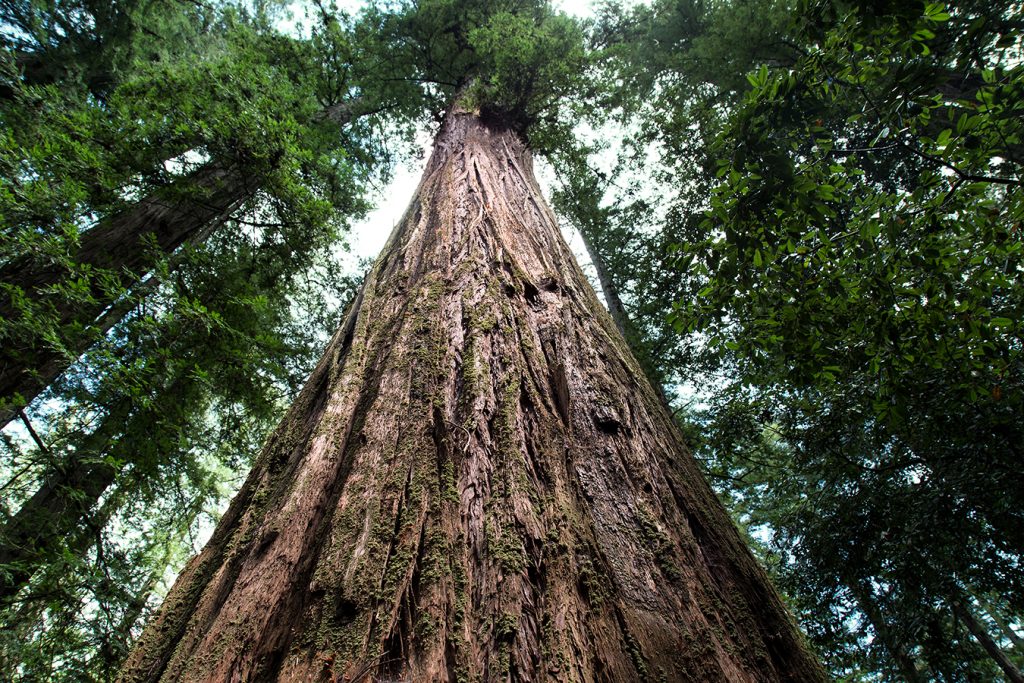 The Parson Jones Tree, Armstrong Redwoods State Natural Reserve, Guerneville, CA. | Image by Mike Weinhold
Two days after my fortieth birthday I made my way to Armstrong Woods in Guerneville, a small town located about ten miles from the Pacific Ocean in Northern California. The town is situated on the Russian River, a beautiful waterway that begins some ninety miles to the north. From every perspective, you see the tall ones, the redwoods that tower above the valley floor, and during the winter these trees draw an amazing amount of water out of our storms. The town was named after George Guerne, a man who made his mark in the timber industry late in the 1800s. At that time, great stands of redwoods covered most of this area. Now, these woods, set aside as a nature preserve by Colonel James Armstrong in the 1870s, are one of the last remaining old-growth redwood groves in Sonoma County.
It had been raining hard for the previous few days and on this day the rains persisted. I had been planning this pilgrimage for a long time, and when I woke [up] that morning the heavy rains disappointed me. I lay in bed for a while, unsure of what to do, but finally, I decided I had to go anyway. I gathered my gear and got in my truck for the drive to Armstrong. It poured all during the forty-minute journey to my destination.
When I pulled into the parking lot of the woods, it was deserted. The heavy weather had made a visit unappealing to others and so I had the old ones to myself. These trees, Sequoia sempervirens, are among the oldest living beings on the planet. They can grow over three hundred feet high and live for more than two thousand years. I came to a stop and turned off the truck. The moment I did, the rain stopped, and the sun appeared.
I got out of the truck and made my way through puddles and mud to the trailhead. Since it was late January, the air was cold, and the mist was high in the treetops, adding to the sudden brilliance and beauty of the day. The ground was saturated, and I had to make my way slowly down the path. The fragrance in the woods was musty, earthy, and rich with the smell of decay and growth, both at the same time. Each tree carried a profusion of jeweled droplets suspended from its branches. I came to one old giant known as the Parson Jones Tree, and gazed up toward its peak. Some three hundred feet high, out of my sight, it broke into the open. But down here at its base, I was the recipient of the most exquisite shower of gems. Each drop that fell from the tree carried the sun’s light, came to the body of the earth pulled by the force of gravity, and offered itself to the earth as a blessing. I was mesmerized for a long time, drinking in the beauty of this combination of water and light. In deep gratitude, I reached out to touch the skin of this elder. Still, I knew I had to continue on, not knowing what I was searching for.
At one point in my sauntering, I came to a redwood with one of the familiar natural openings often featured in pictures of these trees, openings deep enough to enter and stand inside, like a natural cave in the tree trunk. I felt moved to do so now. I stepped down a foot or so to the inner forest floor and stood there surrounded on three sides by the living membrane of this enormous presence. In this stillness, where only my breathing was audible, I heard another voice. Clearly and distinctly the voice said, “I am the Buddha.” I waited quietly and heard the words repeated. “I am the Buddha. This is the dharma, and this is your sangha.”
I recognized the words and their meanings. I myself had not spent much time studying Buddhist teachings but was aware of these specific terms. The Buddha was the teacher, the dharma was the teaching, and the sangha was the community that protected the student and provided the student with support and spiritual encouragement. I could only surmise that these words were coming from this ancient redwood. This old one was the Buddha, was the teacher; the forest and its complex interplay of kingdoms and phyla, species, and families were the teaching; and the community of sorrel and ferns, bay laurels, Douglas firs, and redwoods, creeks and stones, mushrooms, and lichen, live oaks, and blue jays were indeed my spiritual community.
I stood motionless to see if the message would be continued. I finally responded and said that I understood the message. Despite the brevity of this redwood’s speech, it was profound. I had never heard nature speak so directly. I had had moments of intuition or images that conveyed a meaningful exchange but nothing this tangible. And so, I stood a long time in the darkness of the tree, within this great being’s body, feeling as though I was wrapped within its essence.
I stood a long time in the darkness of the tree, within this great being’s body, feeling as though I was wrapped within its essence.
For the next few days, I thought about this encounter. This redwood’s speech was so intelligent. Somehow, in some way, it knew to use those exact words. I say that because I am so quick to question the legitimacy of mysterious messages from the spirit world, particularly experiences that are outside the familiar. When the tree chose to speak to me in those words—“Buddha,” “dharma,” and “sangha”—it forced me to recognize that the origin of this thought was outside my own consciousness because I would never have used those terms to speak to myself. That thought sent me into a period of wondering about the link between the outer world and myself, a link that I previously thought was less definitive. However, this experience revealed to me that the passage between outer and inner was more porous than I had known or than I had been led to believe. Perhaps I am known by the outer world in ways that I had not permitted myself to imagine before.
What was equally important, however, was the event itself and the teaching it carried for me. For far too long we have been detached from nature, from the particulars of the world and her ways of instructing us in how to be a part of the mosaic of life. This knowing is what made our ancestors human in the best sense of the word. “Human” shares the same root origins as “humus,” meaning “of the earth.” Despite all our fantasies of transcendence, resurrection, and ascension, despite all our technologies that separate us and insulate us from the sensual world, we are creatures of this earth, and our substance is informed by the speech of the world.
I go back often to visit this redwood tree with a feeling of friendship and a growing familiarity, realizing that I am hungry for a language that conveys the truth of our bond with the world.
Traditional cultures rarely had words that specified generalities like “tree.” Instead, they had ways of identifying an individual presence—a specific tree—in the woods. This language of particularity generates a much more sensuous relationship due to the simple fact that naming requires knowing. Conversely, I think of how little time we spend in the woods, along riverbanks, in the hills and mountains. These places have become our vacation destinations, but we seldom develop and nurture relationships with them that can evolve and endure through time. How can we come to know the individualities that exist in the world without time and patience, without attention and relationship? It may be that much of what the soul suffers from is related to this severing of its vital connection with the animate world.
When we create an intimate relationship with a place, it becomes for us a refuge. This communion offers us a more thorough expression of our innate complexity. Our entire biological structure is designed for engagement with the world. Every sense organ is a gateway for encounter, and through this exchange, we achieve a greater definition of who we are. The senses are the means by which our bond with the world is consummated and made sacramental. The radical genius William Blake said, “Man has no Body distinct from his Soul for that call’d Body is a portion of Soul discern’d by the five Senses, the chief inlets of Soul in this age.” It is through the blood and sensuality of this flesh that we become incarnate. Till then, till we know that our place is in the world and that our bodies emerged from this earth, we cannot know who we are.
♦
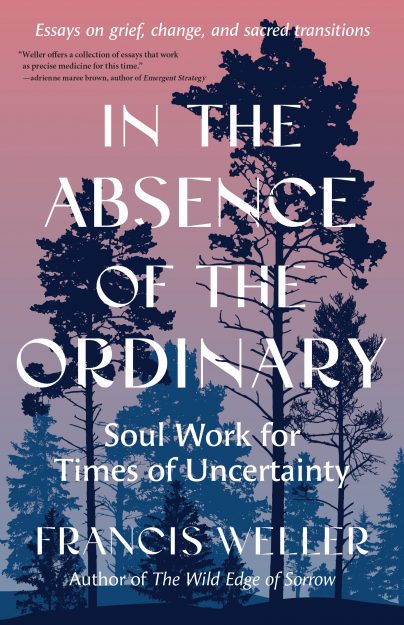
From In the Absence of the Ordinary: Soul Work for Times of Uncertainty by Francis Weller, published by North Atlantic Books, copyright © 2025. Reprinted by permission of the publisher.

Thank you for subscribing to Tricycle! As a nonprofit, we depend on readers like you to keep Buddhist teachings and practices widely available.
This article is only for Subscribers!
Subscribe now to read this article and get immediate access to everything else.
Already a subscriber? Log in.