
ARTICLE AD
To say that Malta has a rich history is an understatement.
Walk the streets and clifftops of this Mediterranean archipelago and you’ll discover layers of history that go back hundreds and even thousands of years.
Below, we peel back the centuries and unveil some of the islands’ most spellbinding historic treasures.
One is the capital city, the entirety of which has been declared a Unesco World Heritage Site. Within is one of the most opulently decorated cathedrals you’ll ever set eyes on, picture-postcard townhouses and the former headquarters of the order that built the city in the 16th century — the Knights of St John.
The island’s old capital, Mdina, is similarly hypnotic, but far more tranquil – a car-free, walled city infused with thousands of years of history.
For a sense of Malta’s military struggles there are epic forts to wander, vast displays of armour to gaze at, and a citadel to visit that was a place of refuge for locals against raiding parties for hundreds of years.
Delve even deeper into the past with a visit to Malta’s ancient subterranean cemetery and megalithic temples, Unesco-listed sites predating the Pyramids that reveal how the island was once home to a remarkably advanced prehistoric society.
Valletta — the Baroque capital built by the Knights
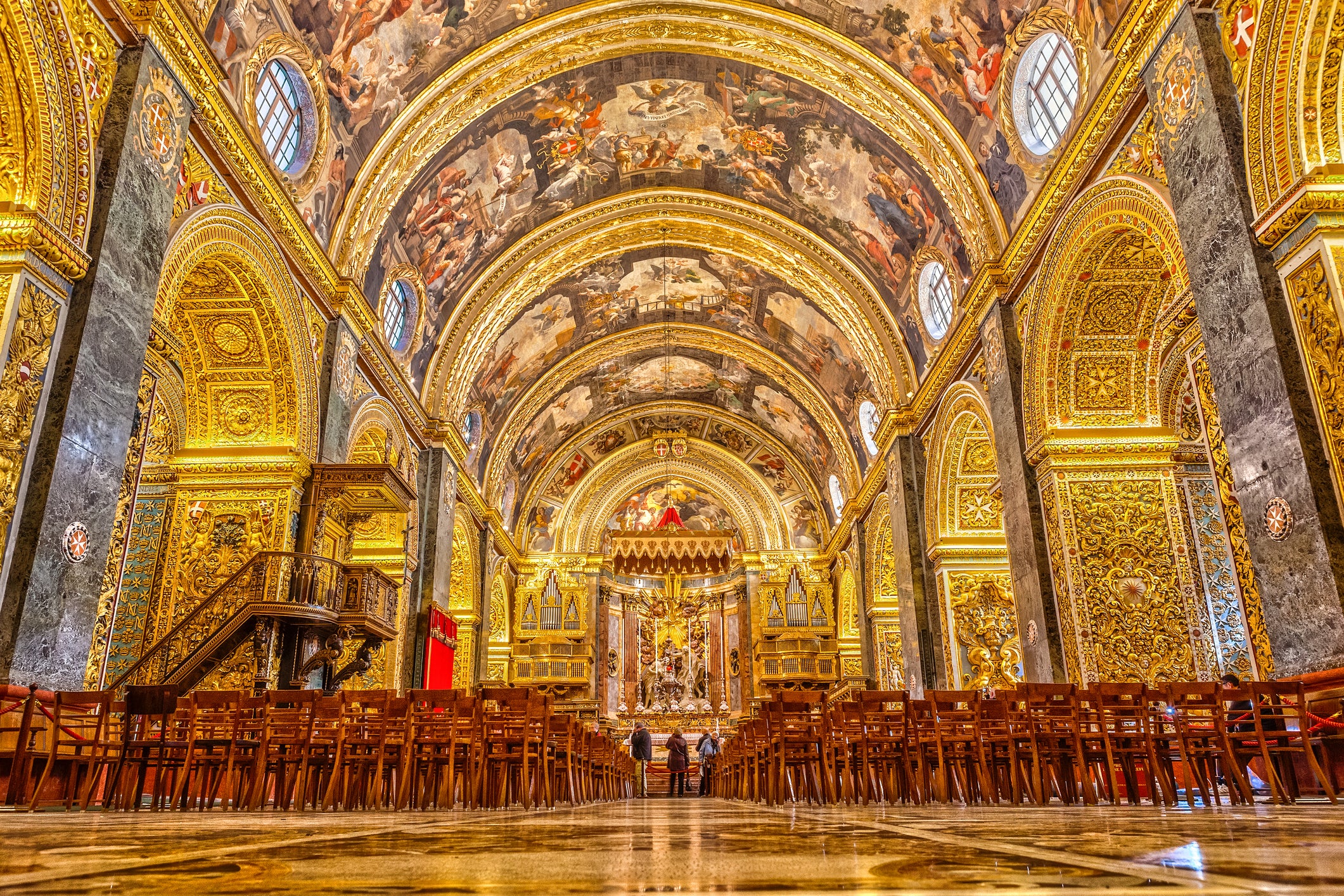
Perched on a rocky peninsula between two natural harbors, capital-city Valletta is tiny, covering just 60 hectares, or about one-fifth the size of Central Park.
But it packs a historical punch.
Built in 1566 by the Knights of St John — who came from noble families around Europe and ruled Malta from 1530 to 1798 — the honey-colored city is laced with stunning 16th and 17th-century townhouses, many of which now house atmospheric restaurants and bars, and jammed with around 320 monuments.
One of the most important landmarks to visit is St John’s Co-Cathedral, which was built by the Knights in the 1570s.
On the outside, it’s unprepossessing, but step inside and you’ll be greeted by a riot of lavish decorations that unambiguously signal power and wealth. There are carved stone walls, floors covered with marble tombs and a beautiful, painted vaulted ceiling. The eye will also be drawn to Caravaggio's oil-painting masterpiece, The Beheading of Saint John the Baptist.
The Grand Master’s Palace, in the heart of Valletta, is another can’t-miss landmark. This former Knights nerve-center is home to one of the world’s greatest collections of arms and armor — underscoring the order’s military prowess — and rare French tapestries.
One of the best vantage points from which to drink in the city’s splendor is the 16th-century Upper Barrakka Gardens, originally a place of repose for the Italian Knights of St John.
Great place to stay: The Barrister (rooms from $245) sits right in Valletta’s historic core and features a bijou rooftop terrace with skyline views.
Read more: Malta’s coastline is one of the Mediterranean’s most spectacular — here’s why
Mdina — Malta’s ancient ‘Silent City’
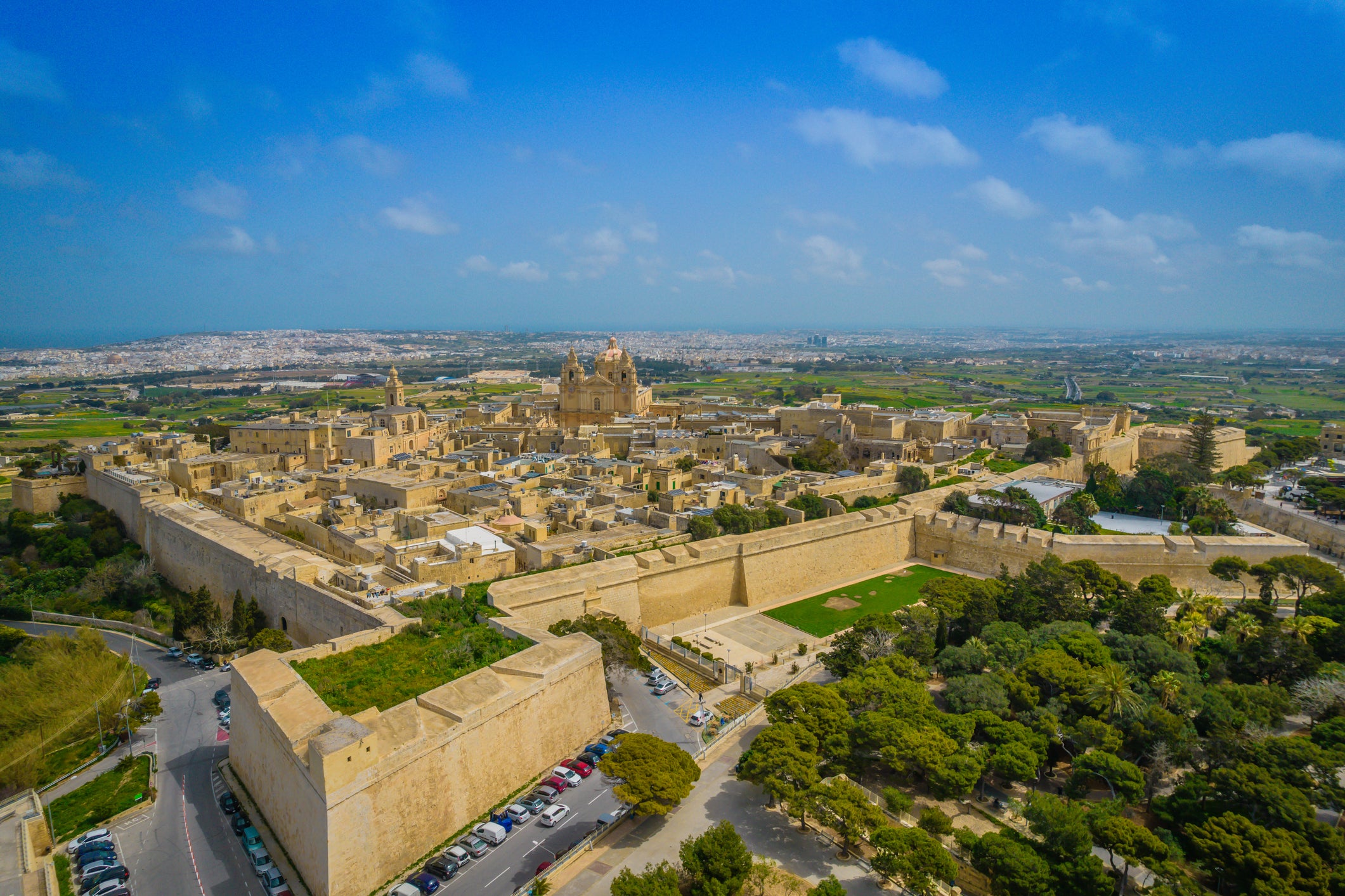
Mdina is a spellbinding journey through thousands of years of Maltese history, and a truly tranquil experience.
This incredible walled city — Malta’s old capital — dates back to the Bronze Age, after which it was ruled by the Phoenicians, Romans, Arabs, Normans, and eventually the Knights of St John.
Wander its labyrinthine streets and you’ll feel the depth of that history with every step — and you’ll hear every step. Mdina, car-free and with a population of just a few hundred people, is so quiet that it’s been dubbed Malta’s “Silent City.”
One of the key photo opportunities is the city gate, which you may recognize from Game of Thrones — it was used as the entrance to King’s Landing in the hit HBO series. The stone portal was built in 1724, and with its intricate carvings, makes for a suitably theatrical entrance to the city.
St Paul’s Cathedral also delivers drama, with an elegant dome that dominates the skyline and stunning painted ceilings inside.
Don’t leave without walking the perimeter walls, which offer impressive views of the maze-like city interior and out across the surrounding patchwork fields to the Mediterranean beyond.
Great place to stay: The Xara Palace Relais & Châteaux (rooms from $320) is one of the few hotels set inside Mdina’s walls, and the converted 17th-century palazzo delivers a lost-in-time-and-space atmosphere, with antique-festooned rooms.
Read more: 10 best hotels in Malta, from Valletta to St Julian’s
Vittoriosa (Birgu) — where Malta held the line
.jpeg)
Vittoriosa — also known as Birgu — offers further, fascinating immersion into the world of the Knights of St John, for this Lilliputian city — which sits directly across the Grand Harbour from Valletta, forming part of the so-called “Three Cities” (Birgu, Senglea and Cospicua) — was the Knights’ headquarters before Valletta existed, and helped ensure victory in the Great Siege of 1565.
The part of the city that bore the brunt of the onslaught from Ottoman forces was the formidable Fort St Angelo, which served as the nucleus of the Knights’ defense.
The fort was opened to the public in 2015, and stepping inside is an eye-opening glimpse into Malta’s military past. Interactive exhibits tell the story of the siege, and you can explore the former residence of the fort commander and see the Guva, the 16th-century oubliette accessible only by a trapdoor in the ceiling where the artist Caravaggio was held in 1608.
Stroll the ramparts for mesmerizing harbor views.
Earmark time, too, for a look around the Inquisitor’s Palace, a complex that had a dual role from the 16th to the 18th centuries as both a grand residence for Holy Roman inquisitors enforcing religious orthodoxy and a prison for accused heretics.
The streets of the city will hold you spellbound — they’re beautifully preserved and intimate.
Great place to stay: Casa Birmula Boutique Hotel (rooms from $230) is set in a restored townhouse and offers superb skyline views from its rooftop terrace and pool.
Read more: Exploring Gozo, Malta’s wilder, quieter island
Malta’s deepest history — structures that predate the pyramids
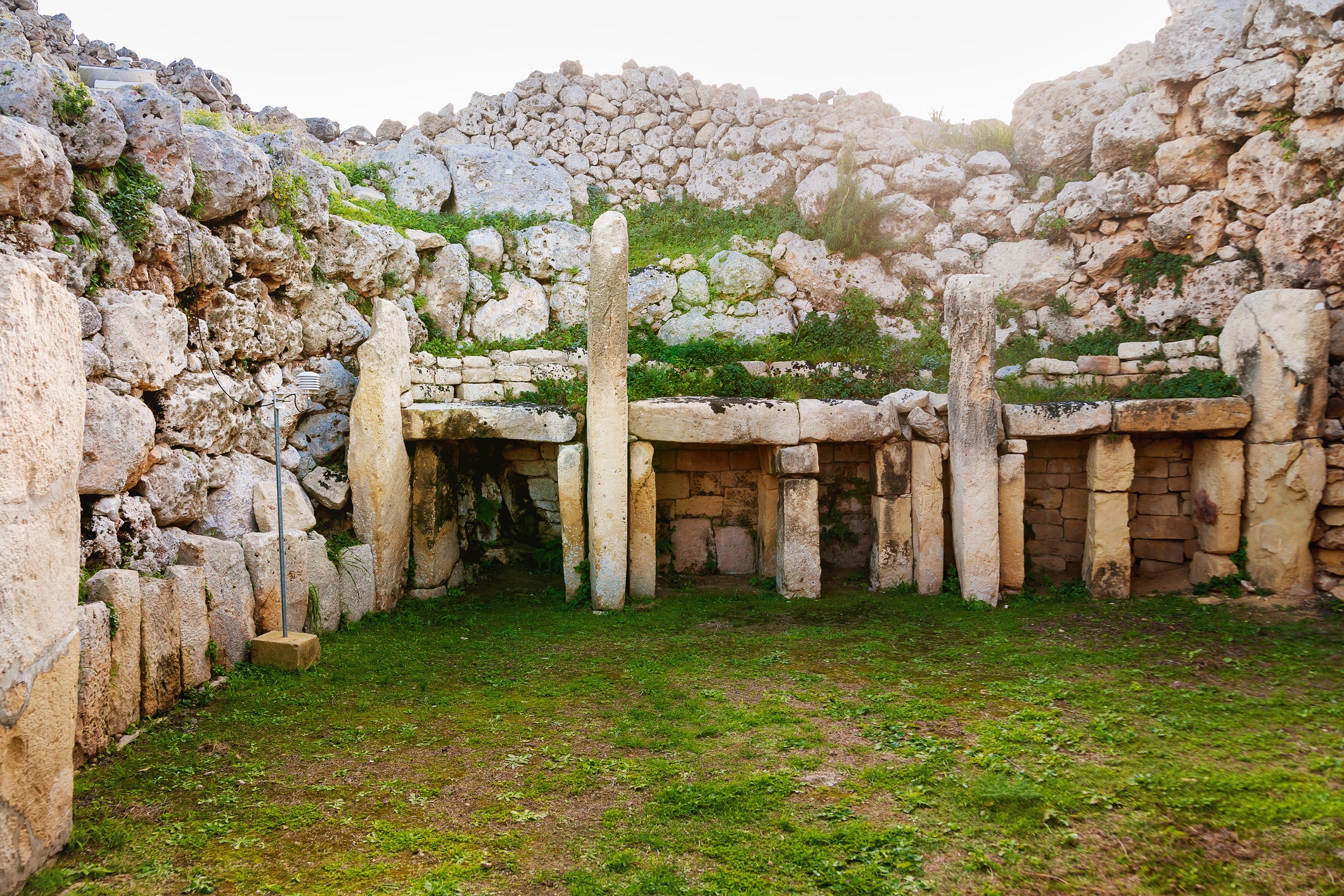
The archipelago’s history runs astonishingly deep. In fact, it’s home to seven Unesco-listed megalithic temples and an underground cemetery that are among the oldest surviving human-built structures on the planet, some of which predate the Pyramids and Stonehenge.
The society behind them was one that flourished, then suddenly collapsed. The reason why isn’t clear — some researchers believe farming and deforestation led to catastrophic soil degradation — but one thing is certain: these architectural masterpieces, built with extremely limited resources, indicate that Malta was home to an advanced prehistoric society capable of remarkable feats of engineering.
One of the most impressive monuments is Ggantija, a temple on the island of Gozo dating back to 3600-3200BC created from limestone blocks and built to a striking scale.
On Malta’s southern coast, around 1,600 feet apart on the crest of a ridge, are the similarly ancient and eye-opening temples of Hagar Qim and Mnajdra. Key areas of Mnajdra are illuminated by the sun during the equinoxes and solstices, indicating symbolic and astronomical understanding.
The subterranean Unesco-listed necropolis of Hal Saflieni Hypogeum — on a hill in the suburb of Paola, not far from the Grand Harbour — is an even more prized sight: because exhaled carbon dioxide damages the delicate limestone walls, only around 10 people at a time are allowed inside.
Book far in advance, up to two months if possible, to view halls, chambers and passages dug in three levels that were in use between 4000 and 1500BC.
Great place to stay: Kempinski Hotel San Lawrenz (rooms from $200) on Gozo has gardens and multiple pools, and is within easy reach of Ggantija.
Read more: 11 of the best things to do in Valletta, Malta
Gozo Citadel — the island’s defensive heart for centuries
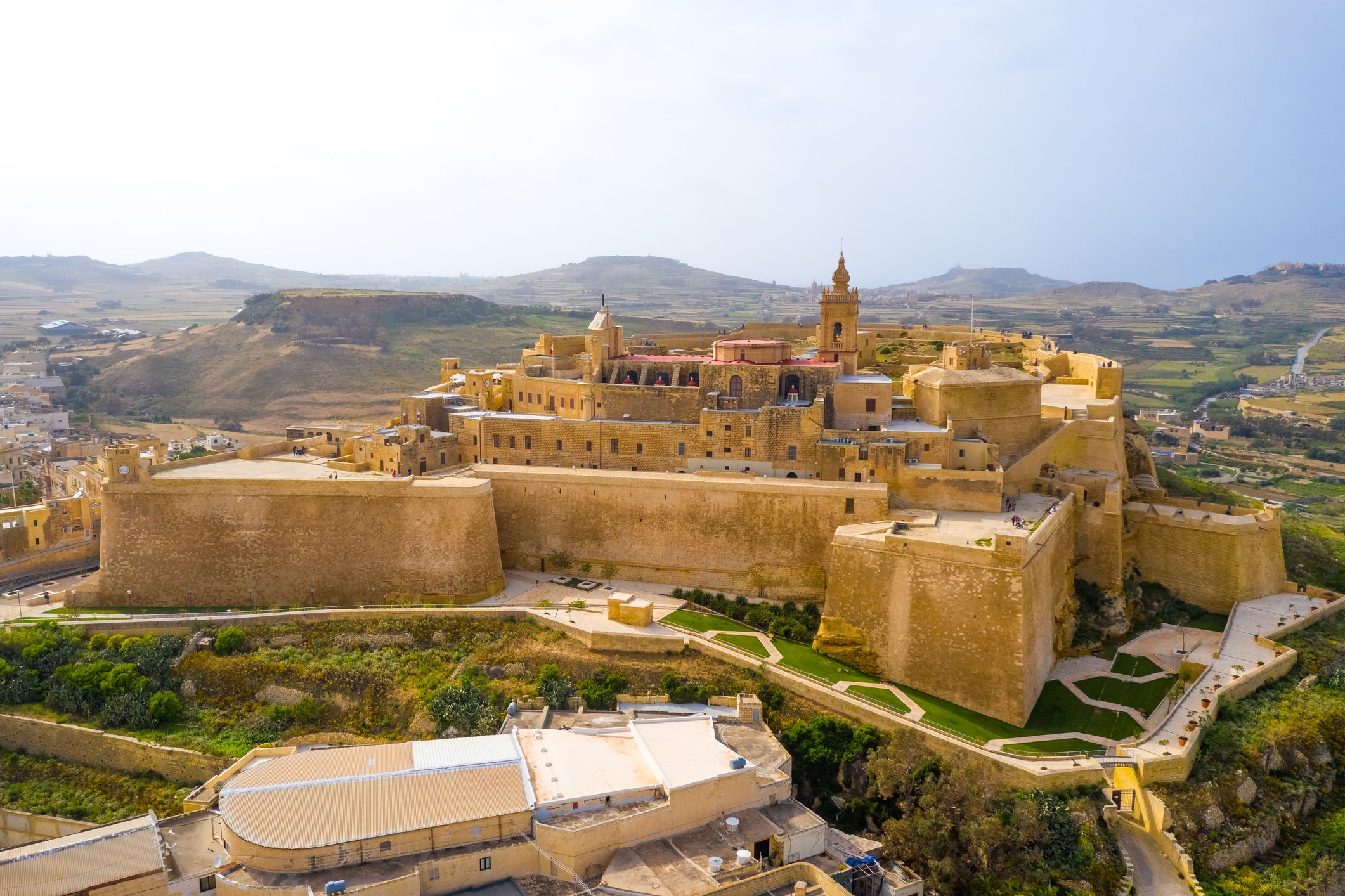
Gozo’s fairytale walled Citadel (known locally as Il-Kastell) crowns the island’s main town, Victoria (also known as Rabat), and occupies a site that’s been fortified in some way since the Bronze Age.
While today it’s largely a historic attraction (though there are a handful of residents), in the past it was a vital refuge for locals.
In fact, from the late Middle Ages until the early 17th century rural families would shelter nightly in the citadel as protection against pirate and Ottoman raids.
Take to the ramparts and it becomes clear why the citadel was so vital for defense — you can see almost the entire island.
Ground-level explorations unveil a world within a world, a maze of hushed, narrow lanes, tranquil squares and small museums, including the Gozo Museum of Archaeology, Folklore Museum, and Nature Museum.
The early 18th-century Cathedral of the Assumption is the flagship attraction, featuring a hypnotic ceiling painting that creates the illusion of a dome.
Great place to stay: Hotel Ta’ Cenc & Spa, Gozo (rooms from $260), a short drive from the citadel, is an oasis: there are gardens, pools and countryside views. And noise pollution is non-existent.
Read more: Seven Unesco sites in Europe that are worth the hype