ARTICLE AD
On a summer morning a couple of years ago, we went for a hike on the fabled Bright Angel Trail, one of the most popular trails in Grand Canyon National Park.
As scholars of tourism and outdoor recreation, our conversation inevitably turned to the visitor experience at the Grand Canyon and a question that has plagued the parks since their inception: Are the national parks overcrowded?
It’s not a simple question, but we believe that people have been answering it incorrectly for over a century, as many Americans have come to a decisive conclusion: Yes. Of course, some specific locations within parks can get overcrowded, and some people are more sensitive to crowding. But often people wrongly assume that a busy park means a crowded one, or that having other people around is inherently bad.
As far back as 1935, one of the founders of the American wilderness movement, Aldo Leopold, described the national parks as “over-crowded hospitals trying to cope with an epidemic of esthetic rickets.”
Presidents and Congress have discussed the issue, as have most major newspapers in the nation at one time or another. Magazine headlines and research articles have decried “overcrowding” and the “parks being loved to death.” Our own research fields have fueled this obsession with crowding.
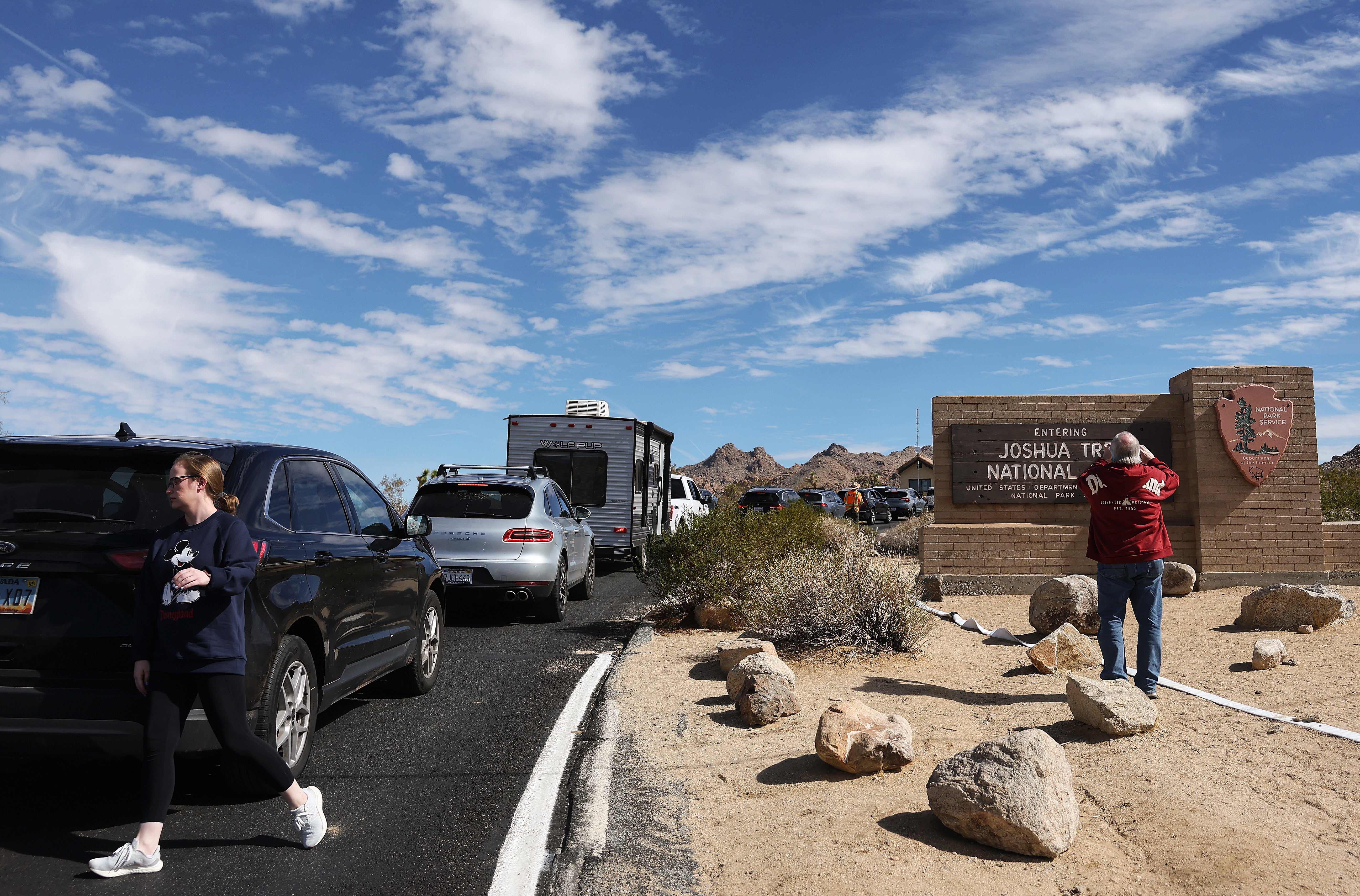
However, our analysis, as well as work by others, has found that being in public parks and natural environments with other visitors is a powerful opportunity to enhance experiences in these places rather than detract from them.
We note that the assumption that nature is best experienced in solitude or only within one’s own group reflects a generally western and elitist perspective and does not align with how people often actually experience parks or the quality of their experiences in the presence of others.
Beyond crowding, toward ‘communitas’
Hiking on the Bright Angel Trail that morning in 2023, we noticed vignettes that challenge the crowding assumption. The trail was busy. It was early, and the south wall of the canyon was still blanketed in shade. Two families, one hiking up, the other hiking down, were chatting and sharing insights at a bend in the trail.
A young hiker shared her binoculars with an elderly man, focusing them on a distant, rare desert bighorn sheep. An older couple smiled as a gaggle of kids ran uphill and past them, racing to the ice cream promised to them on the canyon rim. Another hiker pointed out a California condor sailing above. Together, we marveled at its beauty.
Despite the number of people on the trail, we did not feel crowded. Rather, we felt a spontaneous sense of community and togetherness. Anthropologist Victor Turner called this feeling “communitas,” a shared experience that a person might encounter during a pilgrimage, surrounded by other travelers with a shared journey and goal.
About the authors
Will Rice is an Associate Professor of Outdoor Recreation and Wildland Management, University of Montana. Bing Pan is an Associate Professor of Tourism Management, Penn State. This article is republished from The Conversation under a Creative Commons license. Read the original article.
Others have written, too, about the value of experiencing national parks in the presence of others, finding a shared sense of awe and affirmation of values. Visitor surveys conducted in the Cleveland National Forest near San Diego in summer 2025 show that the more people experience communitas, the less likely they are to feel crowded.
In fact, in 1922, more than a decade before Leopold’s lament about “over-crowded hospitals,” conservation advocate Robert Sterling Yard described the sharing of space and time as crucial elements of the national park experience.
He noted that a person “sits around the evening camp fire with a California grape grower, a locomotive engineer from Massachusetts, and a banker from Michigan.” He continued: “Here the social differences so insisted upon at home just don’t exist. Perhaps for the first time, one realizes the common America – and loves it.”
It’s a matter of perspective
It is important to remember that each person has the power to shift how they react to the number of people around them in parks. Being crowded is not an objective state; it is a negative perception of social conditions.
For instance, when people see visitors as different from themselves, they are more likely to feel crowded. But by recognizing that tendency and reframing the interaction, people are more likely to find communitas.
Communitas, too, is in the eye of the beholder. When people view social interactions in parks as opportunities to share in a larger collective experience, they open up the possibility of experiencing communitas.
This summer, we urge you to enter America’s national parks with perhaps a different perspective. Experience the collective awe of watching Old Faithful erupt with a few hundred of your fellow pilgrims in Yellowstone National Park. Find wonderment in sharing a sunrise from Cadillac Mountain in Acadia National Park or sunset from Olmstead Point in Yosemite National Park. Seek the power that comes from seeing the Grand Canyon for the first time, together.
Most importantly, be the person who points out that condor, gives a neighboring camper that extra hot dog, or takes that photo for another family. Find your communitas, help others to do the same and, together, consider the grandeur of the shared experience of America’s national parks.